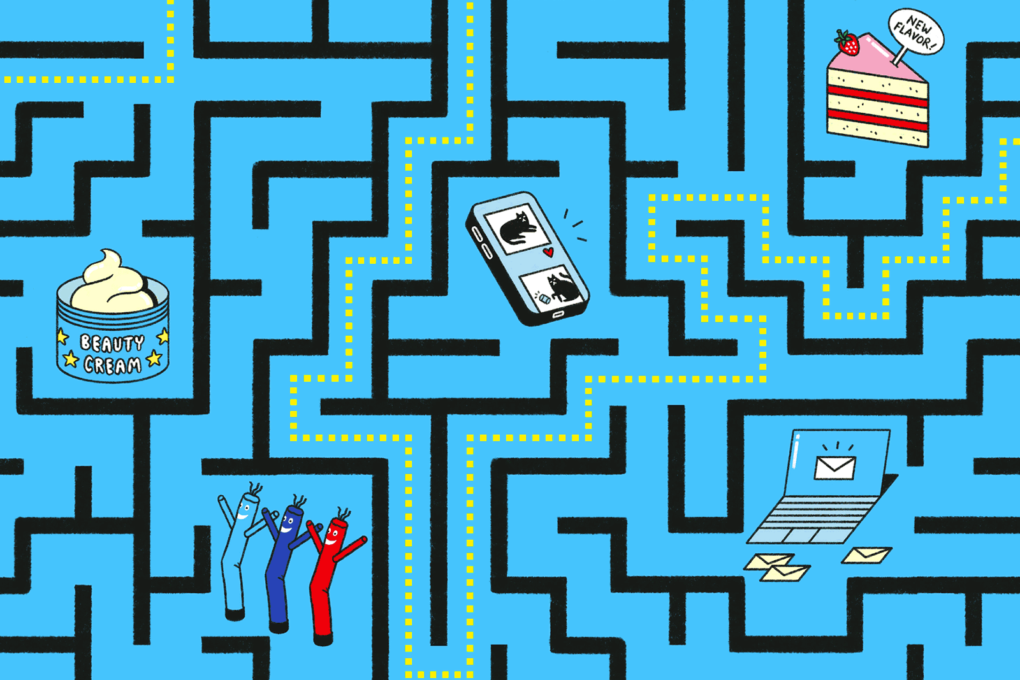
Imagine a winding maze full of twists and turns. To complete it will take focus and an ability to resist the shiny distractions designed to draw you off course. This labyrinth represents the attention economy, and L&S researchers, students and alumni are here to serve as your tour guide. They’ll walk you through the tangled ethics of the attention economy, the science behind your ability to focus
Researchers across the College of Letters & Science are tackling the tough questions of our time. But to get results, they need support. That’s where CRISP comes in. The L&S Collective for Research Impact and Social Partnerships bridges the gap between researchers and the industry, community and government partners who will help fuel the next generation of discoveries.
Environmental stewardship comes in many forms. From reporting on thawing permafrost in the Arctic to restoring prairies in Wisconsin to lobbying politicians for change, these L&S alumni are showcasing how to make a difference.
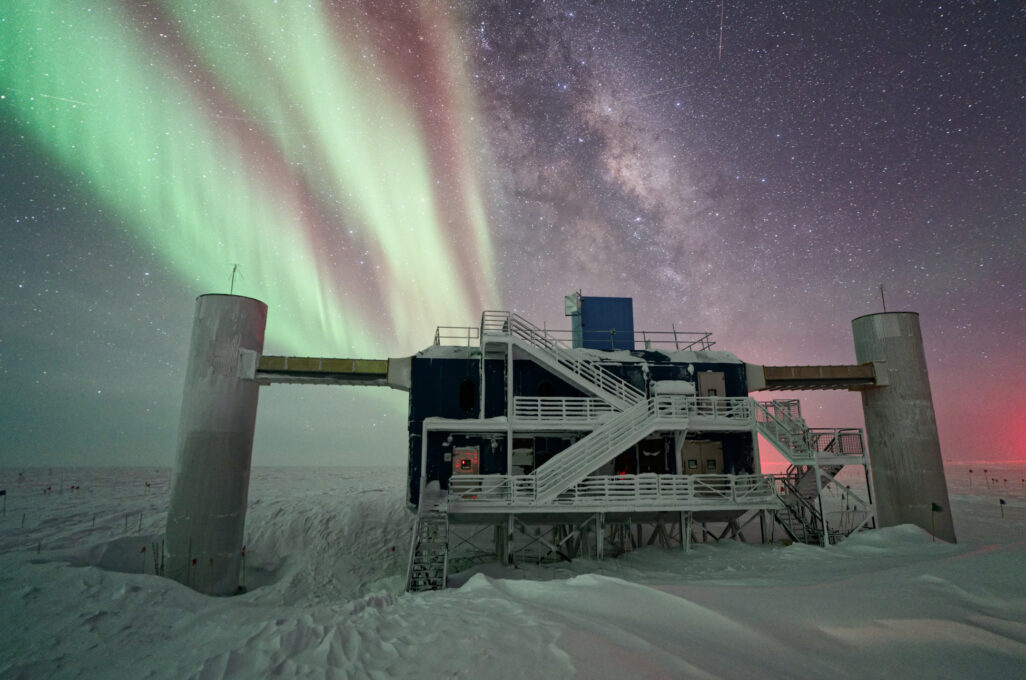
The IceCube Neutrino Observatory is the first detector of its kind, designed to observe the cosmos from deep within the South Pole ice. The research center is operated by UW–Madison and is supported by the U.S. National Science Foundation to collaborate with scientists around the world. A new upgrade at the field site allows more precise measurements of neutrino properties, making it the world’s premier neutrino experiment. “Seeing the refurbished drill come back to life again 15 years after IceCube’s original completion is truly remarkable,” says Albrecht Karle, a professor of physics and principal investigator of the IceCube upgrade. Photo: Ilya Bodo (IceCube / NSF)
May 26, 2026
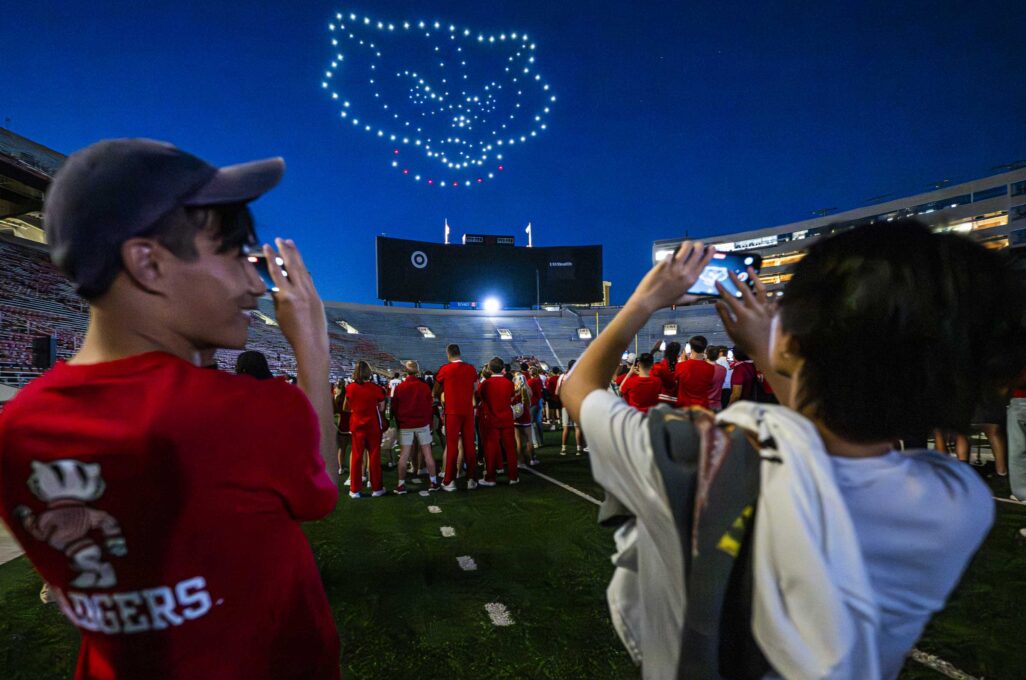
This year, the University of Wisconsin–Madison welcomed 8,500 new freshmen to campus, representing every county in the state of Wisconsin. The students also hail from 50 U.S. states, the District of Columbia, Puerto Rico and 51 nations around the globe. As part of the welcome festivities, thousands of new students gathered at Camp Randall to be a part of the W Project, grouping together to form the iconic Motion W made up of new Badgers. After the photo op, the new Badgers stuck around for music from the University of Wisconsin Marching Band and a drone show that featured quintessential campus imagery like Bucky Badger, the Bascom Hill flamingos and the lyrics to “Varsity.” Photo: Taylor Wolfram
November 20, 2025
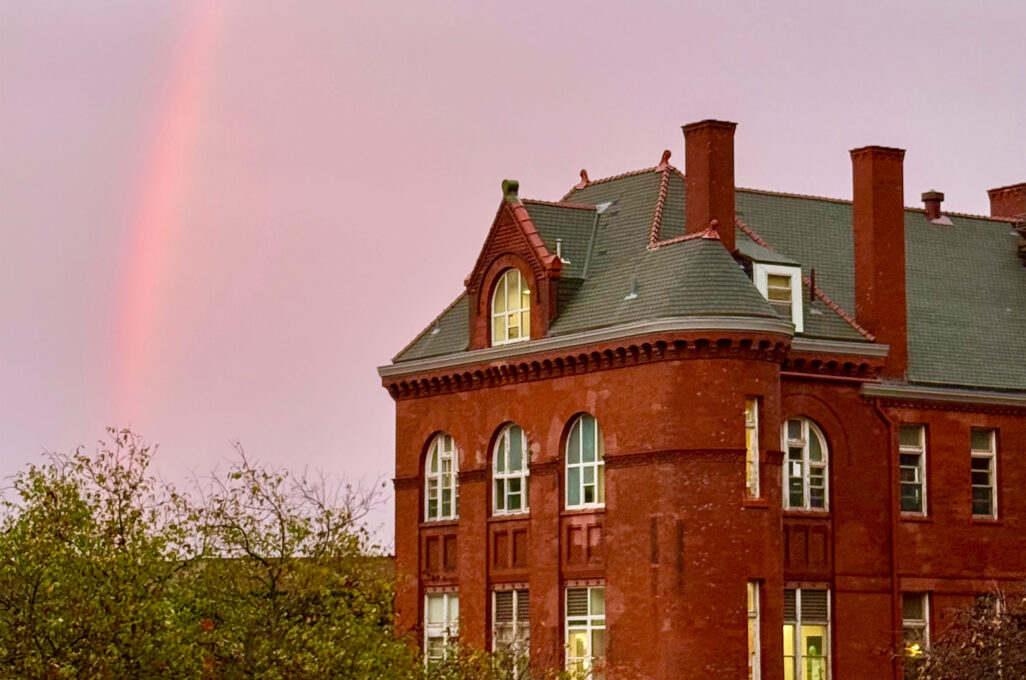
Just before sunset, the rain clouds cleared, and the last rays of light created this picturesque rainbow over Science Hall. Housing a handful of L&S units, including the Department of Geography, the red brick building at the bottom of Bascom Hill is one of the most beloved spots on campus. Over the years, it has served as a hub for the sciences, with the Departments of Geology, Zoology, Botany, Physics, Meteorology and more all calling it home at one point in their histories. The current Science Hall was constructed in 1887 to replace the original, which burned down in a tragic fire. The structure holds a notable superlative: It’s the oldest still-standing building that uses structural steel, which was relatively new technology at the time it was built. The College of Letters & Science is working on restoration plans for this historic building. Althea Dotzour / UW–Madison
May 30, 2025
The strongest solar storm in decades lit up the Madison sky on May 10 and 11 after a wind of charged particles from the sun crashed into Earth’s magnetic field. Collisions between the particles and molecules of oxygen and nitrogen produced the characteristic colors of the aurora borealis, seen here in a panorama of four combined images taken in rural Columbia County. This photo was taken by astronomy and physics undergraduate student Samuel L. Warfel, and it was picked as a winner of UW–Madison’s annual Cool Science Image Contest. You can see all of the winners at the McPherson Eye Research Institute’s Mandelbaum & Albert Family Vision Gallery on the ninth floor of the Wisconsin Institutes for Medical Research through the end of the year. Photo: Samuel L. Warfel
November 19, 2024
Lakeshore Nature Preserve — home to the beloved Picnic Point — is about to get a new, world-class visitor and education center. Department of Economics alumnus Jerry Frautschi (’56) made a $14.3 million gift to support the new building, which is planned for the area outside the stone wall at the Picnic Point entrance. The Lakeshore Nature Preserve Frautschi Center will showcase UW–Madison’s commitment to sustainability and support hands-on experiential learning and research for more than 25 academic programs. The plan is to have it certified as the state’s first Living Building, meaning it will produce more energy than it consumes. Photo: Jeff Miller