
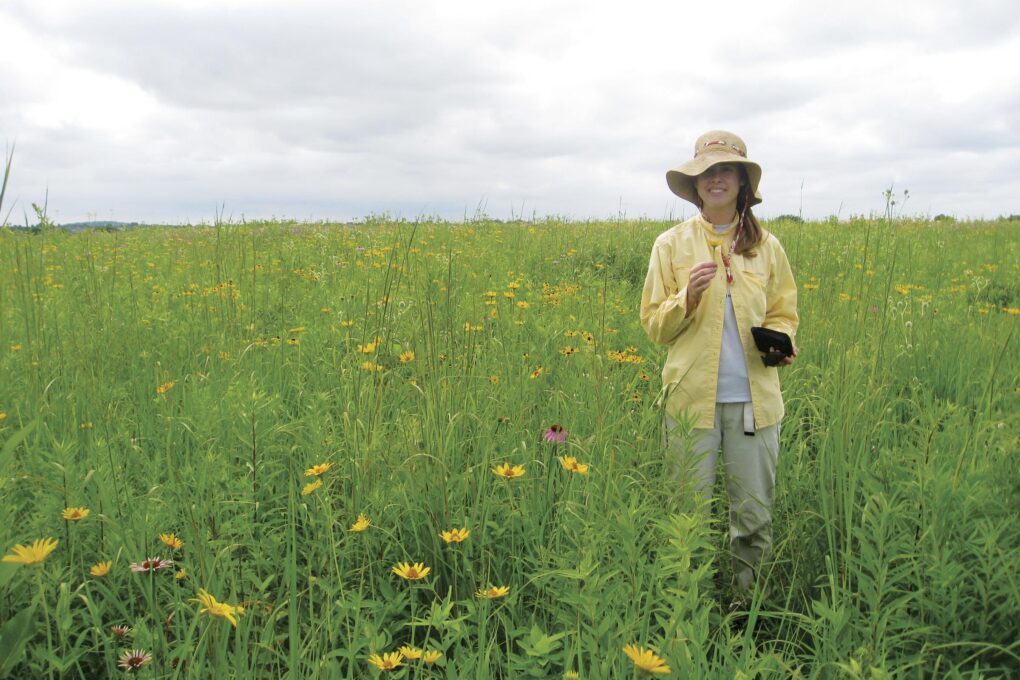
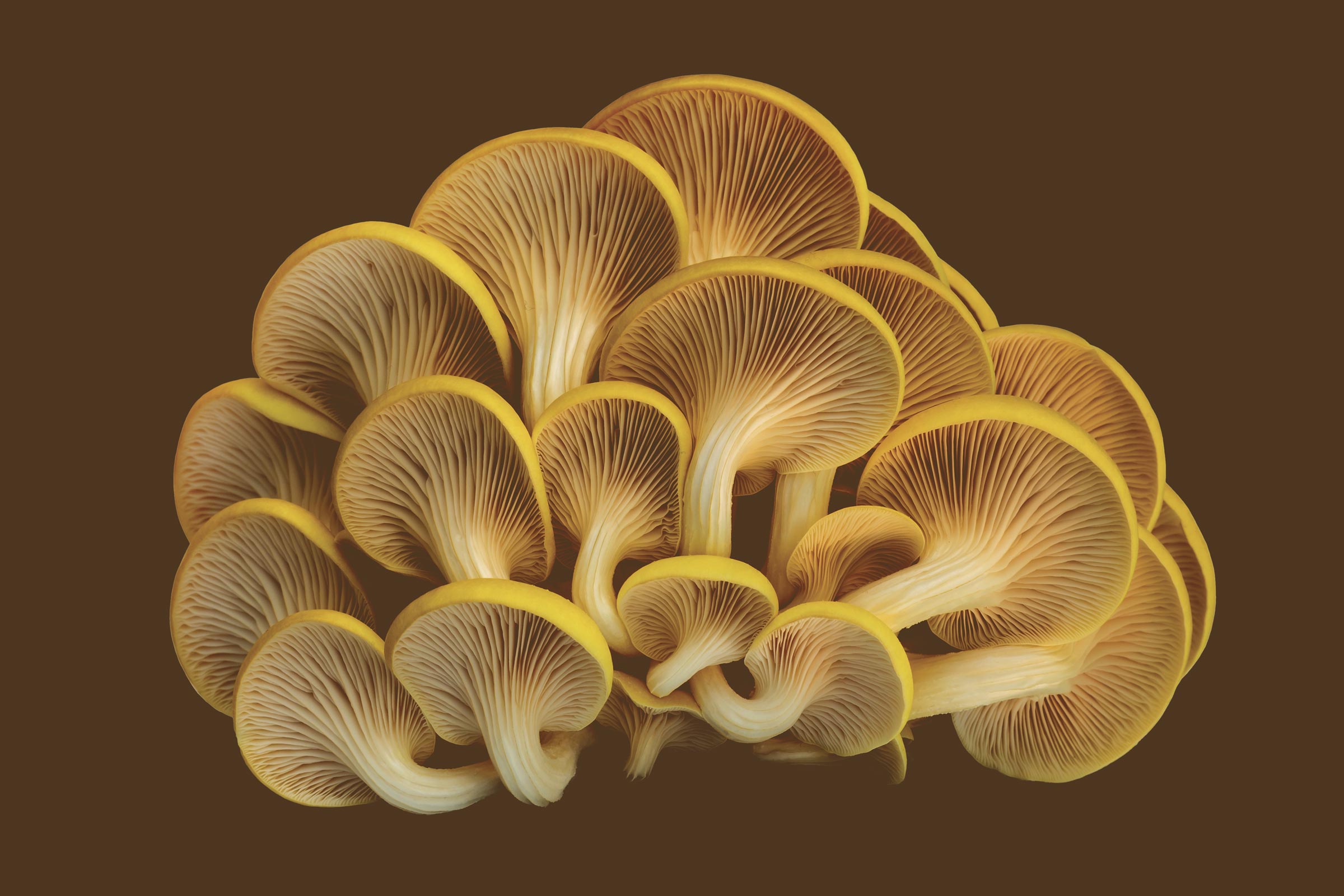
For Aishwarya Veerabahu, the discovery started with a gut feeling. Hiking around Wisconsin’s forests, she felt surrounded by golden oyster mushrooms on all sides.
“They’re everywhere,” says Veerabahu, a PhD candidate in the Department of Botany. “When you walk through the forest and see golden oysters, you get this eerie, instinctive feeling that these mushrooms are an invasive species.”
This wasn’t Veerabahu’s first experience with invasive populations. She grew up in Southern California, where out-of-place plants are spreading across the scrublands and outcompeting native species for resources. When she saw those dense clusters of golden oyster mushrooms on logs around the forest floor, it reminded her of the invasive grasses and thistles back home, and she knew immediately that she was looking at an invasive species.
When you walk through the forest and see golden oysters, you get this eerie, instinctive feeling that these mushrooms are an invasive species.
But as a researcher, she had to prove it. Veerabahu took samples and dug into the data, poring over spreadsheets that analyzed the biodiversity of fungal life collected from wood with and without golden oyster mushrooms.
“The eureka moment was kind of unglamorous,” Veerabahu says. “I was scrolling through Excel, and I could see by eye — before doing any statistics — that the sampled trees with golden oysters on them had fewer fungal species than trees without golden oysters.”
Decreased biodiversity is a key indicator that the spread of a species is having a significant negative impact on the native ecosystem. Combine that with the knowledge that golden oysters are native to Eastern Asia, and the case for golden oysters being invasive is not only compelling — it’s closed. But how did these mushrooms trek across oceans and continents to become so prolific in North America? And why are they most prolific in the Midwest of all places?
To hypothesize about their journey overseas, you need one crucial culinary clue: Golden oysters are delicious. Their vibrant yellow caps are nutty and sweet, often compared to the taste of a cashew when cooked. Companies started shipping grow kits, so fans and farmers alike could cultivate their own golden oysters at home. Early documentation of this comes in a book written by mycologist Paul Stamets in 2000.
“He describes sneaking a few samples over to North America, and then he adds this foreboding sentence suggesting it will be very interesting to see whether this species ‘escapes’ to the woodlands,” Veerabahu says. “Of course, at the time there were not many laws about fungi and moving them around — honestly, there aren’t many laws now. That’s something I’m trying to change with my work.”
The thing about mushrooms is that they don’t spread through seeds and root systems, but instead they reproduce through spores, which are tricky to contain. When mushroom farmers and enthusiasts cultivate mushrooms or compost scraps, they spread, in this case quite quickly. This pushes out native fungal populations that play a crucial role in the carbon, nitrogen and phosphorus cycles of the forest.
In 2014, the first documentation of rogue golden oysters came from an Iowa mushroom club. Sightings continued popping up from foragers, naturalists and community scientists in Wisconsin, Michigan and New York. Now, some Midwestern forests have become such hot spots that people have been known to leave their foraging trips carrying trash bags stuffed with golden oysters.
“It’s crazy because this is the first cultivated mushroom to escape captivity and spread,” Veerabahu says. “And it definitely escaped within the last couple of decades and spread in front of our eyes.”
While research on invasive plant and animal species is fairly common, research on the invasive fungal kingdom is still in its infancy. Amanita muscaria — the famed “Super Mario mushroom” known for its red cap and white spots — is considered the first invasive that moved across the Southern Hemisphere with help from the timber industry. This is a fact Anne Pringle, the L&S Mary Herman Rubinstein Professor and Vilas Distinguished Achievement Professor of Botany, tracked down through her work in the Pringle Laboratory, which investigates the ecology and evolution of fungi.
It was Pringle who inspired Veerabahu to come do research in Wisconsin with the Pringle Lab. Now, she’s part of a team of experts who are helping create guidelines on how to protect global fungal populations. This summer, she’ll speak at a United Nations World Biodiversity Forum about addressing invasive fungal species and conducting socially informed management.
“It’s tough as a scientist to be working with something that has already done damage here in North America,” Veerabahu says. “But it feels really good to be getting the warning out in Europe and potentially preventing the devastation of fungal communities native to there.”
Eat Up!
Love the taste of golden oysters? Consider one of these edible alternatives native to most of North America (but always check with your local mushroom club before foraging).
- Summer Oyster: Umami and nutty with notes of licorice
- Morels: Savory and earthy with smoky undertones
- Chanterelle: Nutty and peppery with a fruity aroma
- Black Trumpets: Rich and smoky with truffle-like qualities
- Pearl Oyster: Mild and savory with a slightly sweet flavor