A Gift for Generations
Irving & Dorothy Levy Hall’s construction was made possible thanks to the generosity of brothers Marv (’68, JD’71) and Jeff (’72) Levy, who made a $20 million gift in honor of their late parents, Irving and Dorothy Levy. Read all about them here.
Stitched Together
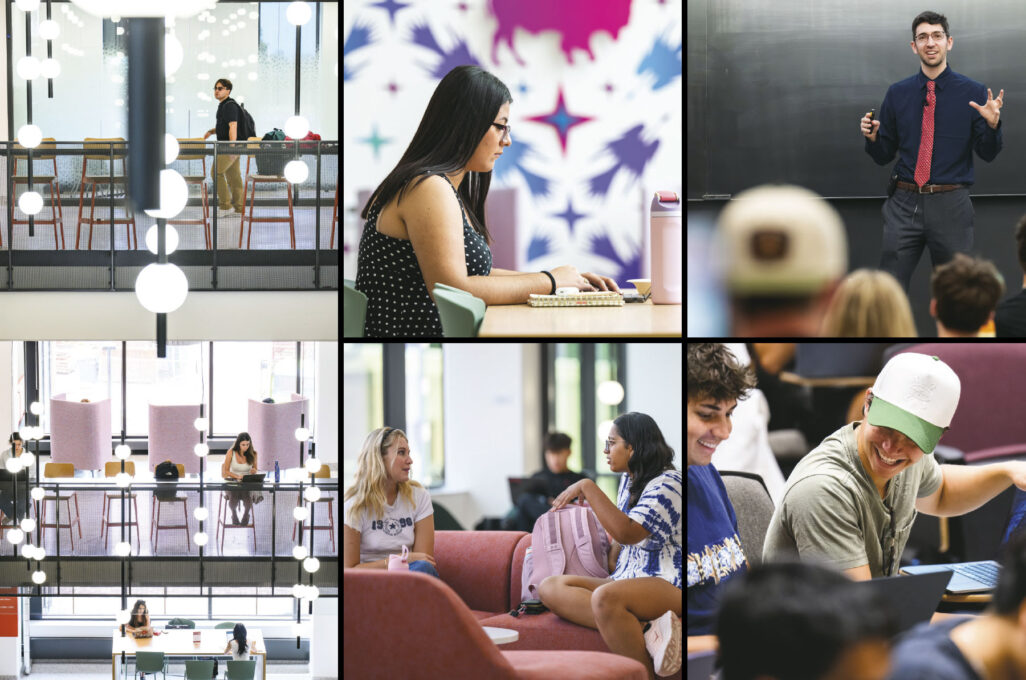
Collaboration can technically happen anywhere, but it’s far more powerful in a building that’s been expressly designed to bring people together.
For Sasha Maria Suarez, collaboration is at the heart of everything she does, though historically she’s had to trek between far-flung locations like Ingraham Hall and the Humanities Building to get the job done. She’s an assistant professor with joint appointments in the Department of History and the American Indian & Indigenous Studies Program. Since the move to Irving & Dorothy Levy Hall, her colleagues are only a few floors — and in some cases, a few doors — away.
Suarez’s work studies the experiences of Indigenous women with a special focus on the Great Lakes. Her most recent research relies on community engagement and collecting oral histories. It’s always been in her plans to partner with researchers in the Department of Gender & Women’s Studies, with whom she has already worked, on a project about the growing number of missing and murdered Indigenous women in Wisconsin.
“That connection can be built out more,” says Suarez, who is teaching both of her classes in Irving & Dorothy Levy Hall this fall. “We can conduct community-engaged, public-facing work around these issues that will be strengthened by the proximity we have to each other.”
That potential collaboration also extends to events like student poster sessions and public lectures. The Program in Chicanx/e & Latinx/e Studies is celebrating its 50th anniversary this fall, and program representatives have been working with their new neighbors to include them in the festivities. There are student angles, too: One of Suarez’s graduate students is an art history major looking at artistic representation in the Midwest, including Ojibwe and Hmong art. Proximity to the Asian American Studies Program could help the project flourish.
Rachel Kuo, an assistant professor in the Department of Gender & Women’s Studies, is one of the researchers with whom Suarez might one day collaborate. She’s on the fifth floor, two floors above the Asian American Studies Program, Kuo’s other academic home. Kuo’s research focuses on the ways technology can promote or hinder political and social movements, and it’s deeply rooted in the details of what it takes to get people together to accomplish goals. She’s expecting the new hub to leverage that same spirit.
People often think of humanities work as more ‘individual,’ and that’s simply not true. There’s so much that demands conversations with colleagues and peers.
“It takes away a little bit of that logistical friction of collaboration,” Kuo says. “People often think of humanities work as more ‘individual,’ and that’s simply not true. There’s so much that demands conversations with colleagues and peers. The importance of being able to have infrastructure and space to do that work, and to do it in proximity to each other, is significant.”
Max Felker-Kantor, an associate professor in the Department of African American Studies, researches policing and race, a pair of topics that occupy the same academic wheelhouse as that of Simon Balto (’05, MA’10, PhD’15), the Mary Herman Rubinstein Professor of History. The two have collaborated and co-written articles before from a distance, but now they have the chance to see each other nearly every day.
“I can walk up a flight and pop into his office and talk,” says Balto, who also has an affiliation in Felker-Kantor’s department. “Since he joined us last year, he and I have already talked about putting on symposiums about the history we study.”
Listening In
Nearly every incoming undergraduate student will attend a lecture in Irving & Dorothy Levy Hall. Here’s a roundup of three courses that kicked off the inaugural fall semester.
AFROAMER 156: Black Music and American Cultural History
This course is taught by award-winning lecturer Alexander Shashko (’94), who is also a voting member of the Rock & Roll Hall of Fame. During the semester, he covers how Black music has shaped the social, musical and political landscape of the United States from 1950 to the present.
HISTORY 136: Sport, Recreation, & Society in the United States
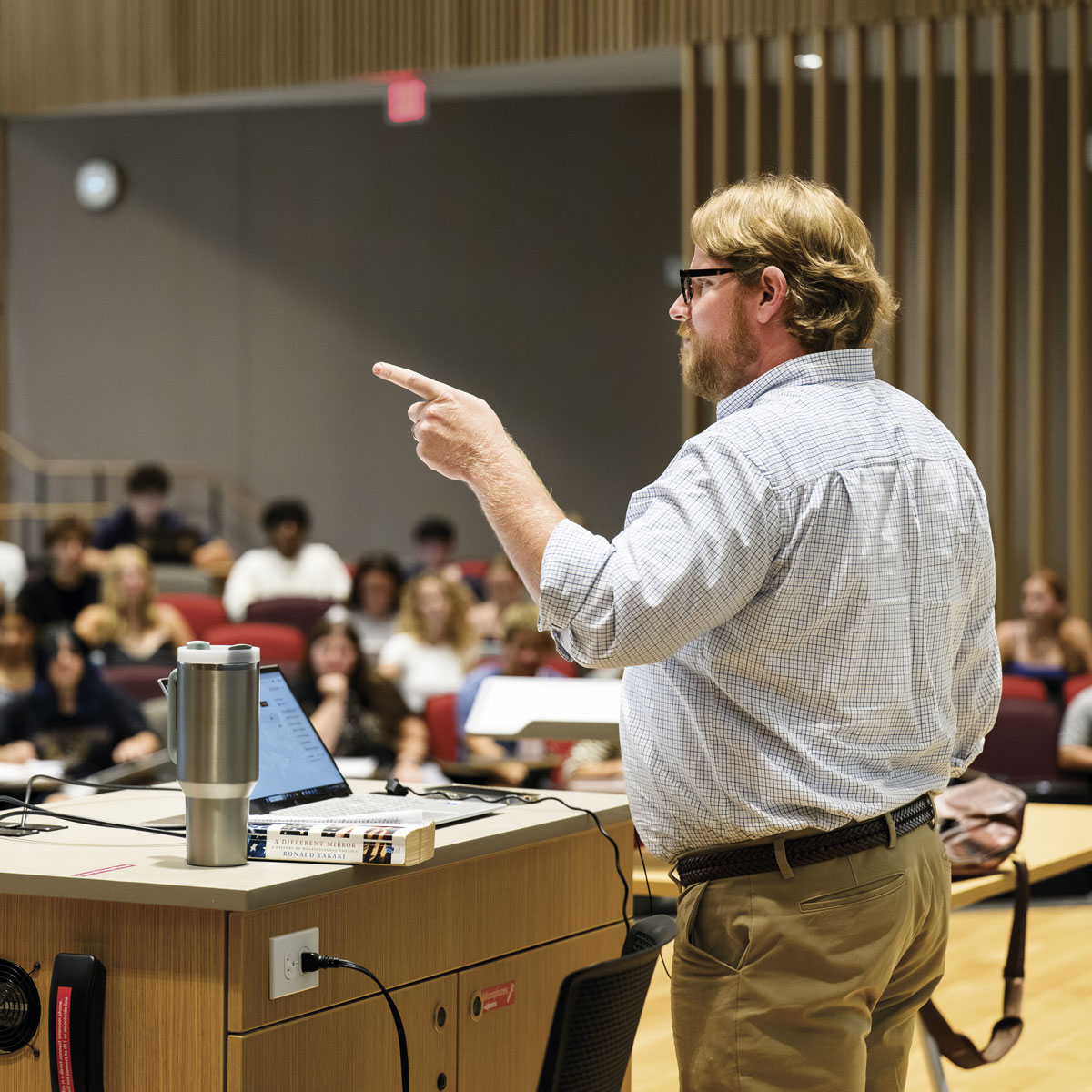
Often, people see sports as an escape from the “real world.” But Ashley Brown, the associate professor and Allan H. Selig Chair in the History of Sport and Society who teaches this course, explains that these games can’t be separated from their political, social and cultural contexts.
AMERIND/AFROAMER/ASIANAM/CHICLA 102: Introduction to Comparative U.S. Ethnic, American Indian, and Indigenous Studies
African American Studies, American Indian & Indigenous Studies, Asian American Studies and Chicanx/e & Latinx/e Studies come together in this comparative ethnic studies course. Collin Rohrbaugh, an instructor within American Indian & Indigenous Studies, teaches students how to examine race, ethnicity and indigeneity within the United States.
Balancing the Books
Before moving into the new building, faculty members had the opportunity to share input on what their needs would be. This led to discussions on everything from cafés to color schemes and lively debates about bookshelves.
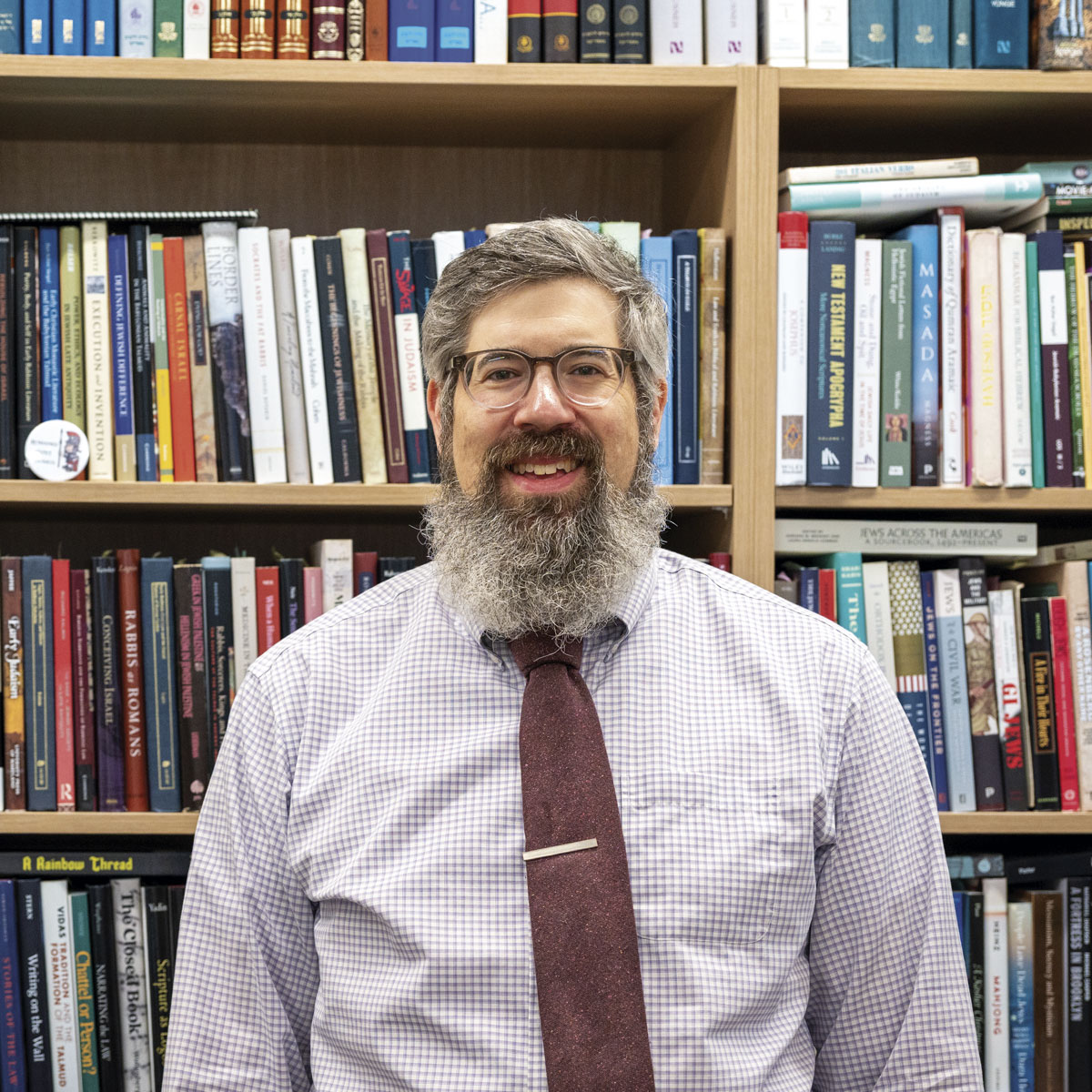
Jordan Rosenblum, the Belzer Professor of Classical Judaism and director of the Religious Studies Program, isn’t one for design discussions. But when the opportunity presented itself to provide input for a building that celebrates the humanities and interpretive social sciences, he wanted to bring his thoughts to the table. That perspective included input on why books are so important to humanities scholars and how design contributes to conversation.
How does it feel that the university is investing in the humanities and the interpretive social sciences?
It is rare for universities to invest in new buildings for departments like ours. Chemistry, engineering, computer sciences — they’re the ones who get new buildings. And the humanities most often get to move into the old buildings. This is a strong statement of the endurance of the humanities at UW–Madison and its field of dreams: “If you build it, they will come.” Plus, these are units that plan on being around for decades to come.
You led the charge in negotiating for more bookshelves in the faculty offices. Why was that so important to you?
Humanities scholars have certain desires, and one of them is that we need books. Many of us in the humanities believe in the power of books and that they are a repository of human knowledge. They’re material artifacts. They change the way we think about things, and they also help us to produce new books. And everyone in this new building is in some way or fashion a historian of some kind. We have magazines, books — I have comic books from the 1970s for a research project I’m working on right now — and they might be some of the last copies left, and they might not be scanned ever. We’re keeping that knowledge around.
What excites you about the design of this building?
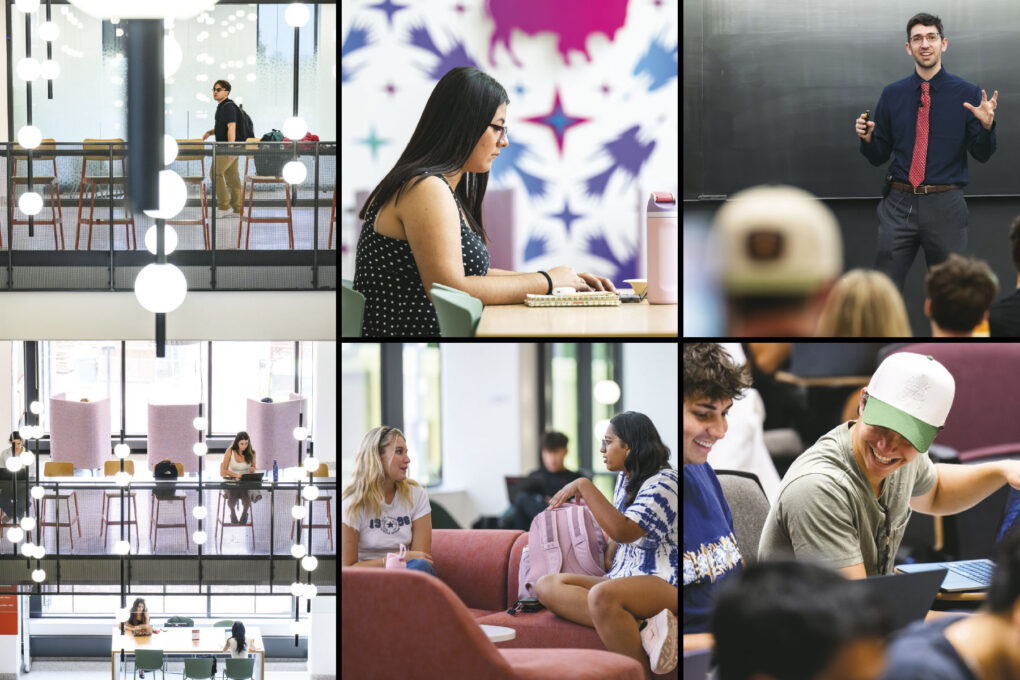
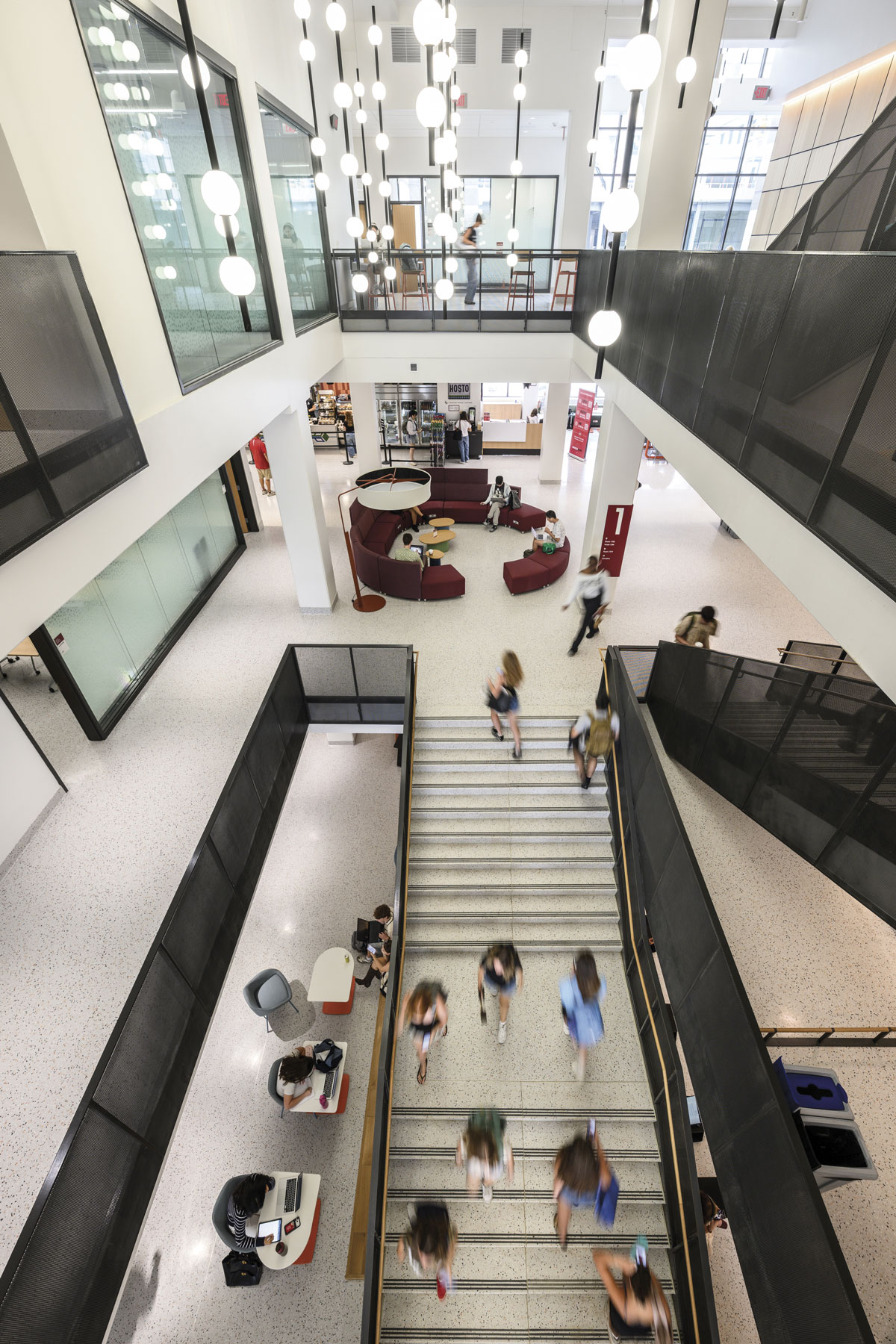
There are huddle spaces, office spaces, classroom spaces, grab-a-coffee spaces and study spaces. I look at all the things that are happening in this building, and the big takeaway is that we — as scholars, students, teachers and administrators — will benefit from having conversations with each other. This building was designed for those conversations, from color scheme to ottoman choice. The design helps you see the widest diversity of conversations that will happen in Irving & Dorothy Levy Hall.
Making History
Many of the academic units in Irving & Dorothy Levy Hall are a direct response to student demand. Take a trip down memory lane with us to look at the origins of these eight departments and programs.
1892: History
History has been taught on campus since UW–Madison’s founding in 1848. It became an official discipline in 1892 with the creation of UW’s School of Economics, Political Science, and History, reflecting growing public interest in the social sciences.
1969: African American Studies
The assassination of Dr. Martin Luther King Jr. in 1968 sparked a wave of protests on college campuses across the country, including UW–Madison. During the Black Student Strike of 1969, students from across campus fought for the creation of a Black studies department, and the department was launched that same year.
1972: American Indian & Indigenous Studies
In 1968, American Indian and Indigenous students started meeting with the chancellor to discuss how the university could better serve their community. The fact-finding mission led to multiple positive developments, including the formation of the new program in 1972.
1975: Gender & Women’s Studies
The field of women’s studies began nationwide in the 1970s. When UW–Madison’s program launched in 1975, it stood out amongst the rest for having autonomy and resources to be leaders in the field. The program’s first office was on Brooks Street, behind where Irving & Dorothy Levy Hall now stands.
1976: Chicanx/e & Latinx/e Studies
This year marks 50 years of the Chicanx/e & Latinx/e Studies Program. It launched in the School of Education in 1976 after years of picketing and advocacy from students and faculty. The program moved to the College of Letters & Science in 1988, which has been its academic home since, and now offers a major and a certificate.
1988: Asian American Studies
The roots of the Asian American Studies Program can be traced to multiple grassroots efforts in the 1970s and 1980s. In 1988, the Pacific and Asian Women’s Alliance wrote a proposal for the creation of a new program, and the Asian Coalition sent it to Chancellor Donna Shalala, who approved it.
1991: Jewish Studies
The Mosse/Weinstein Center for Jewish Studies was founded in 1991 with the mission of studying Jewish religion, politics, society and culture. By 1995, the center had started offering a certificate and, in 2001, a full major.
2000: Religious Studies
In the 1990s, there were already a lot of course offerings related to religion. But it wasn’t until 1998 that the university started offering a certificate in religious studies. The official formation of the program came with the launch of a major in 2000.
A Word of Advice
The College of Letters & Science’s career advising service SuccessWorks has opened a satellite location.
“You don’t need to plan the next 20 years, let’s start with the next 20 minutes.”
That’s what SuccessWorks advisors tell their students when they sit down, nervous about what a future career might look like. They help students identify marketable skills, meet potential employers and find internships in their fields. And now, students can get access to all of this by walking just a few steps into Irving & Dorothy Levy Hall.
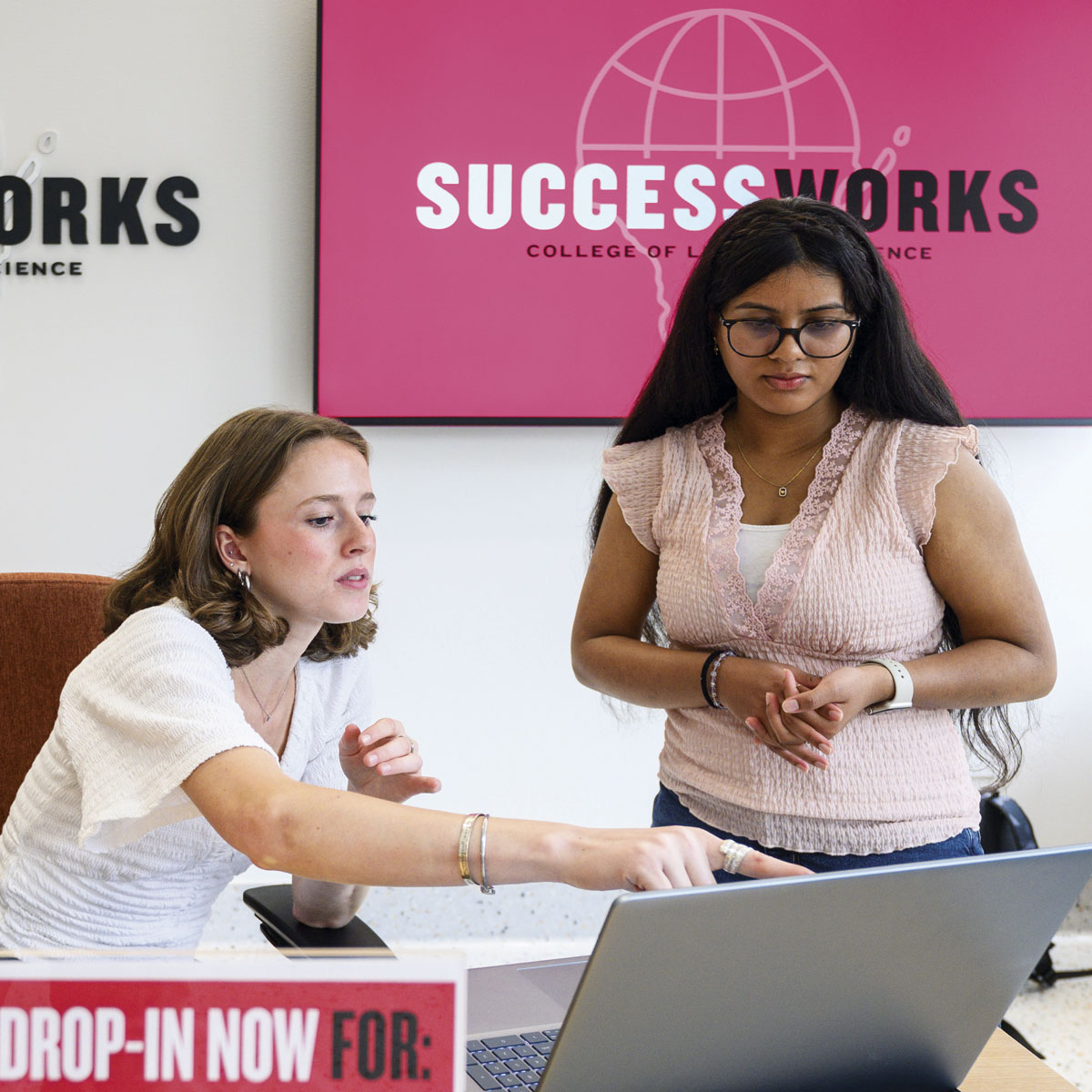
“Students are already really busy, so we think the way to reach more of them is to go to where students are,” says Angie White, executive director for SuccessWorks. “We are the first thing you see when you walk through the front door.”
The mission of the Baumann Family SuccessWorks Gateway is to be accessible for quick career assistance — no appointment needed. That way, they can support more students like Kalani Rodriguez Jimenez. She’s a senior triple majoring in Chicanx/e & Latinx/e studies, legal studies, and Latin American, Caribbean and Iberian studies with plans to pursue law school after graduation. Last summer, she held an internship at a nonprofit in Costa Rica called the Center for Peace Studies researching the rights of immigrants from Nicaragua in the San José central area.
“Before getting support from the SuccessWorks Internship Fund, I was worrying about how I was going to be able to pay for the whole program and if I would need to find another job while I was out there,” Rodriguez Jimenez says. “It took a lot of stress off of me, and I was able to focus on my internship experience.”
Like many students, Rodriguez Jimenez found out about SuccessWorks because of events hosted in their main office above the University Book Store. The introduction led her to opportunities like career advising, resume and cover letter workshops and practice interviews.
“I hope that by having this space in Irving & Dorothy Levy Hall, every L&S student will have heard of us during their time on campus,” White says.