There is history in Chicago’s South Side soil. There are stories of migration and industry, of neighborhoods built by people who came north looking for work and opportunity. It is also the history of young people who grew up amid disinvestment and violence, and who now sow seeds in that same ground to grow something new.
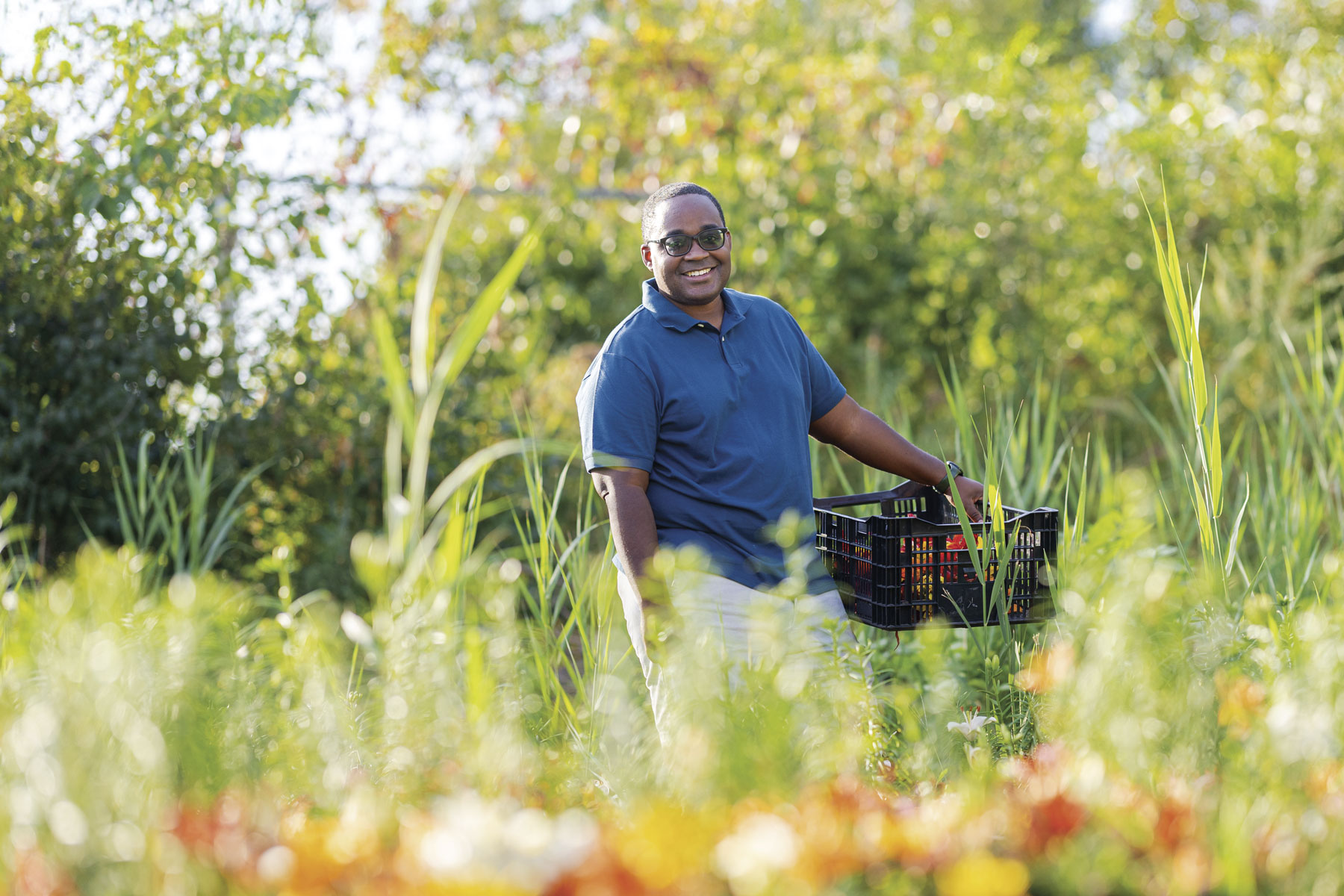
For Quilen Blackwell (’06), this history shapes Southside Blooms. The Chicago-based social enterprise he founded grows flowers on vacant urban lots, trains young people in floristry and farming, and uses urban agriculture to connect them to their communities and to African American history.
“History is a very underrated tool, even in business,” says Blackwell.
Ask him how he arrived at this work, and the story quickly shifts to the people who came before him. He points to Booker T. Washington and George Washington Carver, whose work at the Tuskegee Institute at the turn of the 20th century linked education, agriculture and economic opportunity. He also looks to Jane Addams, whose Hull House began as a settlement in 1889 serving Chicago’s immigrant communities and grew into a model for social work, as well as the Black activists who challenged Eastman Kodak to integrate in the 1960s.
If you’re a kid, maybe this was a place of trauma, and you never would have imagined in a million years that you could be contributing to the healing of that neighborhood.
Blackwell first encountered some of these histories as an undergraduate student at UW–Madison. He arrived planning to study business, but an advisor encouraged him to pursue his passion. He switched to history and eventually wrote an honors thesis on Black labor activists’ efforts to integrate Eastman Kodak and bring African Americans into the company’s workforce.
The thesis left him thinking about the relationship between business and community power. That question deepened after graduation, when he joined the Peace Corps in Thailand and worked with farmers on an organic fertilizer cooperative and with high school students on community projects.
Living in an agricultural community, he began to see the connection between land, natural resources and economic well-being.
“There is something to this connection between the earth and the provision and well-being of communities and people,” Blackwell remembers thinking.
He carried that idea to Chicago. While attending ministry school, he began tutoring at a high school in Englewood and building relationships with students and their families. He also began thinking about his own family’s history: His mother’s family came from Arkansas, where they farmed and sharecropped; his father’s family migrated from Baltimore to Milwaukee. In Englewood, he started thinking about the people who had not had the opportunity to leave.
“We do tell the story of migration and that kind of thing, but we don’t really tell the story of the people who were left behind,” he says.
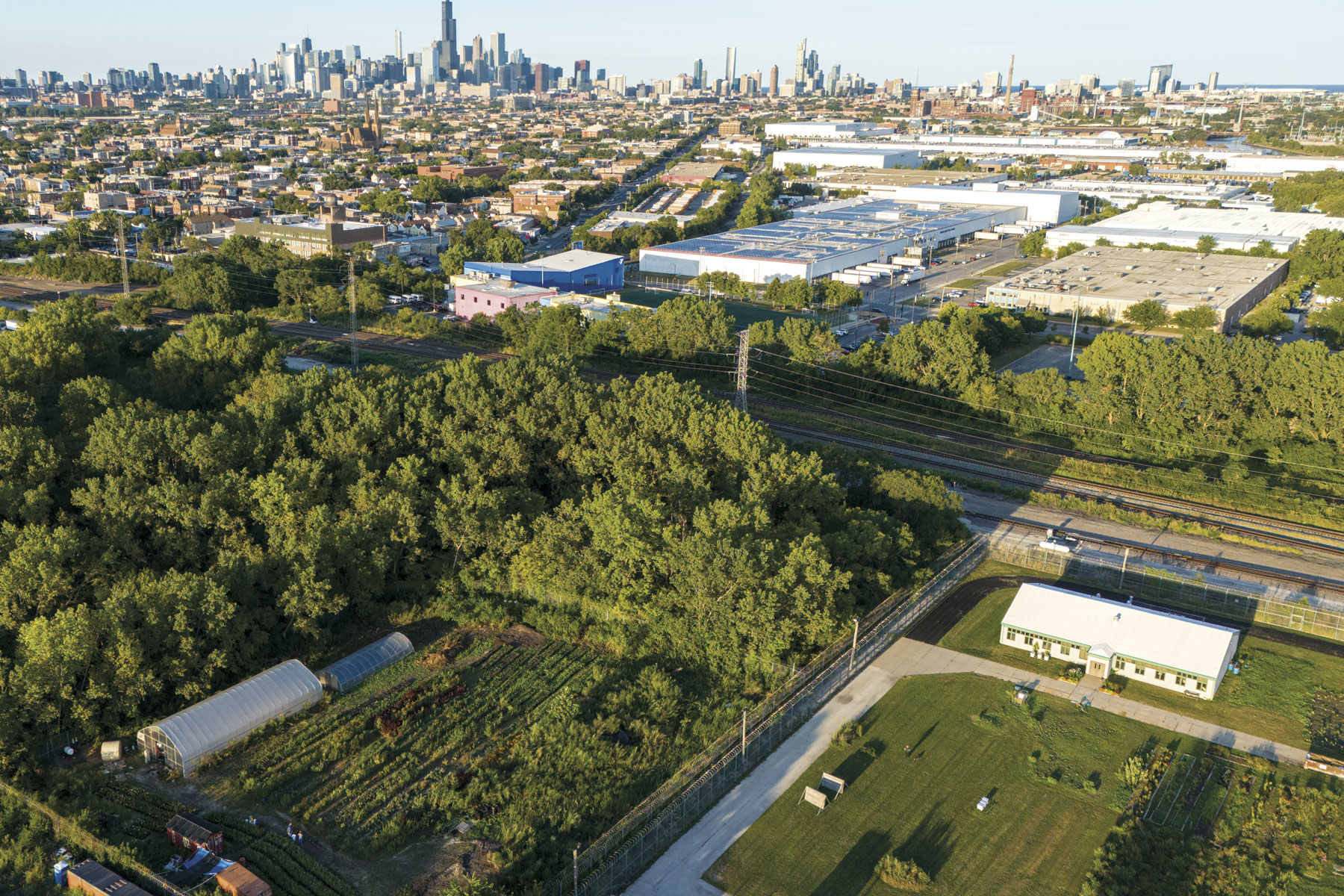
In 2014, Blackwell and his wife, Hannah Bonham Blackwell, founded Chicago Eco House, using urban agriculture and entrepreneurship as tools for building opportunity on Chicago’s South Side. Southside Blooms grew from that work, first as a network of urban flower farms and eventually as Eco House’s in-house floral business. To Blackwell, the approach echoes the historical models he had studied: Start small with what you have, build with the community and let economic opportunity become a means of social change.
“You can really just start small with what you’ve got,” he says.
Today, Southside Blooms operates six farm sites and two flower shops in Chicago as well as a pilot farm in Gary, Indiana. Its workforce development program gives young people ages 16 to 25 training in floristry and farming. And through its Roots2Blooms history storytelling project, the organization also teaches African American history through flowers and takes young people to historical sites in the United States and Africa.
For Blackwell, who was named the 2025 CNN Hero of the Year, the work is about expanding what young people can imagine for themselves. One participant told him, “I didn’t know flowers could take me this far.”
For others, the change is closer to home. Some young people now work on blocks where they once experienced violence and trauma. They plant sunflowers. Bees and birds return. Neighbors stop to admire the flowers.
“You’re literally restoring life,” Blackwell says. “If you’re a kid, maybe this was a place of trauma, and you never would have imagined in a million years that you could be contributing to the healing of that neighborhood.”
For Blackwell, history is not simply a record of what people before him accomplished. It is a reminder that they made choices that changed lives beyond their own.
“I was inspired by all those biographies I was reading,” he says. “And at some point, I thought, ‘You know what? I’m going to lay it down. I’m going to live for something bigger than myself.’”
That is the work Blackwell is doing now, using what he learned from the past to create new possibilities for the people and neighborhoods around him.