Turn left onto North Park Street. Turn right. Slight right toward Lincoln Drive, then turn left onto Lincoln Drive.
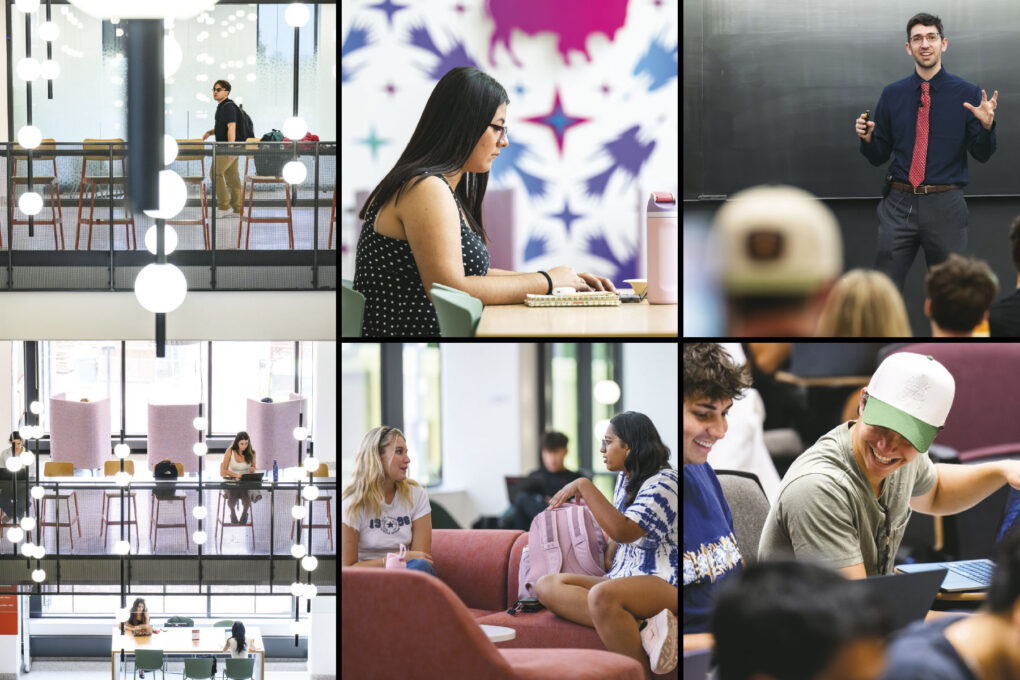
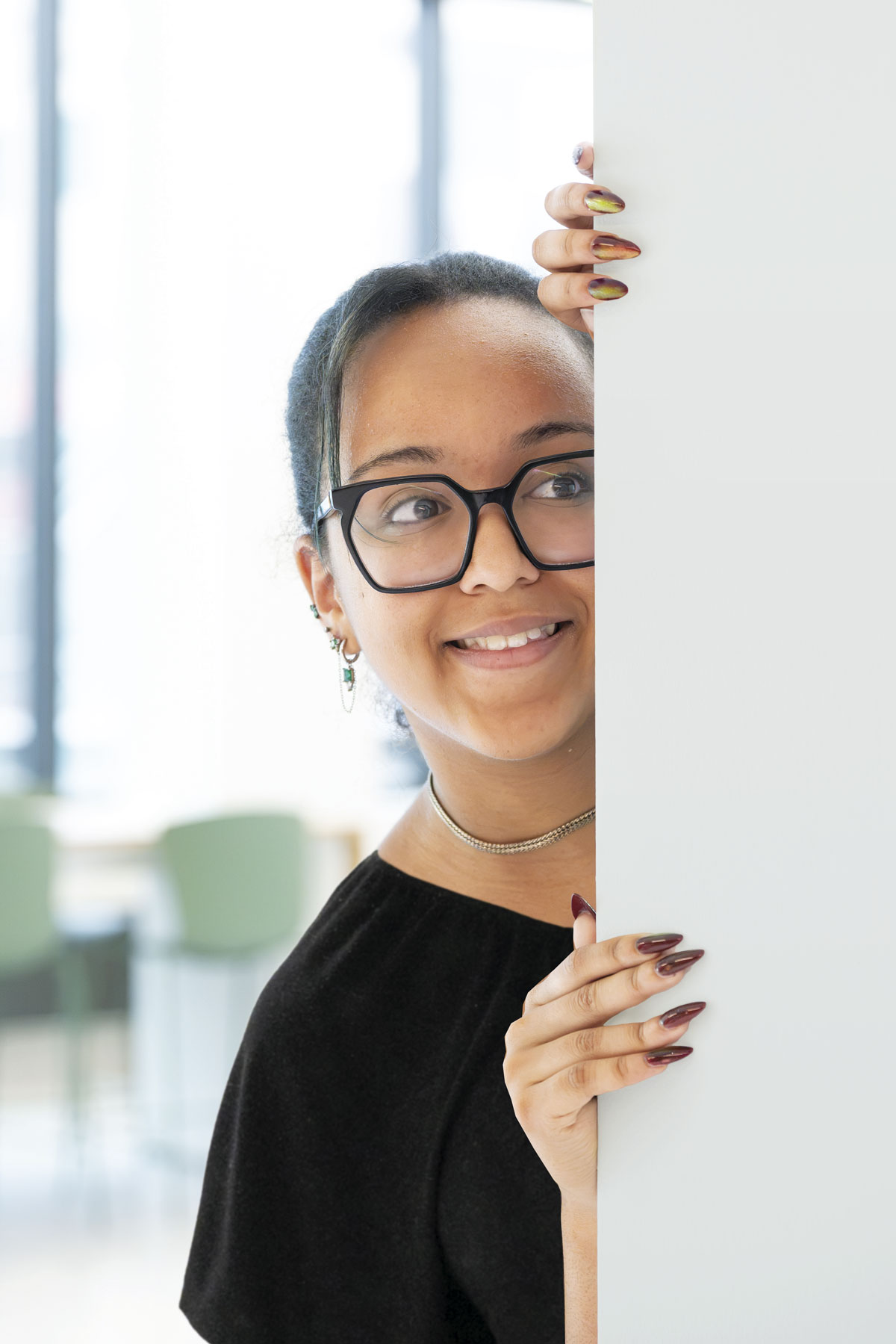
These simple, robotic instructions are generated daily by global positioning systems (GPS) around the world to help people get to where they’re going. They’re also the research subject for Helen Bell, a neurobiology and psychology double major who participated last summer in the Letters & Science Summer of Excellence in Research (LASER) program. Undergraduate students who are looking to work in a scientific lab on campus apply to the LASER program during their first year of studies. Because many research opportunities require students to have completed two or three years of school, LASER stands out as a unique chance to get involved early and test-drive scientific interests.
Bell spent six weeks last summer studying interactions between human brains and maps in the UW Cartography Lab with PhD students Susannah Cox and Alton Hipps (MS’26) under the advisement of Bill Limpisathian, the associate faculty director of the lab and an assistant professor in the Department of Geography. Using technology like the virtual reality headsets, the lab is working to discover how maps could be made more accessible for people with attention deficit hyperactivity disorder (ADHD).
“To navigate with a map, you have to take in information, remember it, relate it to the environment around you and then make decisions while you’re moving, which all demand the cognitive processes that people with ADHD struggle with,” Bell explains. “Our goal is to see how attention works and how we can make mapping more accessible.”
Bell’s research involved testing what cognitive processes have more of an impact on wayfinding. She first had study participants complete basic tasks to evaluate their visuospatial memory and cognitive flexibility. From there, she had them navigate certain paths using a VR headset, with and without maps. This allowed her to measure which of the two processes, if either, had a greater impact on people’s ability to navigate.
Our goal is to see how attention works and how we can make mapping more accessible.
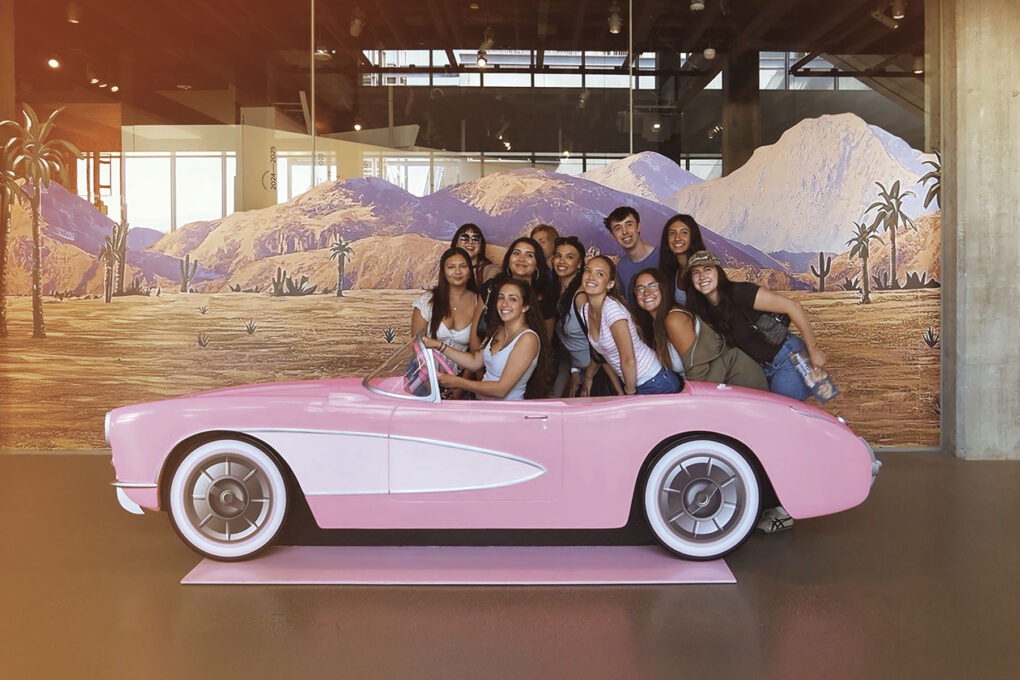
While Bell has long been interested in studying the brain, maps and technology are a newer field for her. Despite a passing interest, she’d never thought about them in the context of research before last summer. In this way, her LASER experience was able to simultaneously play to her interests while also exposing her to novel perspectives and discoveries. LASER also introduced her to a cohort of friends who share her curious nature.
The spring semester before they’re placed in labs, LASER scholars take a one-credit class together that meets once a week. They also take an additional one-credit course during their summer research stint. While equipping them with necessary skills and information, these courses build relationships that stretch beyond the summer. Bell says that those connections have played a key role in her collegiate experience. This fall, she had the opportunity to extend her time as an undergraduate research assistant in Limpisathian’s lab, and the experience has affirmed her dream of becoming a pathologist.
“I’ve gained wisdom from mentors who have experience with research and its processes,” she says. “The LASER program has not only been a wonderful resource to me, but it has also opened a plethora of other resources and has given me a head start to a career in research.”