When Dan Erdman (’80, EMBA’99) looks at a beautiful building or work of art, he asks himself, “What makes it great?” It’s a unique way of thinking he picked up during his time as an undergrad studying art history at UW–Madison. But art history was never his plan. He just took so many architectural history classes during his time in college that the degree requirements aligned by the time he was ready to turn the tassel and graduate.
“I tried to audit a class from an architectural history professor, Narciso Menocal, when I was still a student at Madison West High School,” Dan says. “He turned me down big time. But I came back to do it the right way, and I took every class he offered.”
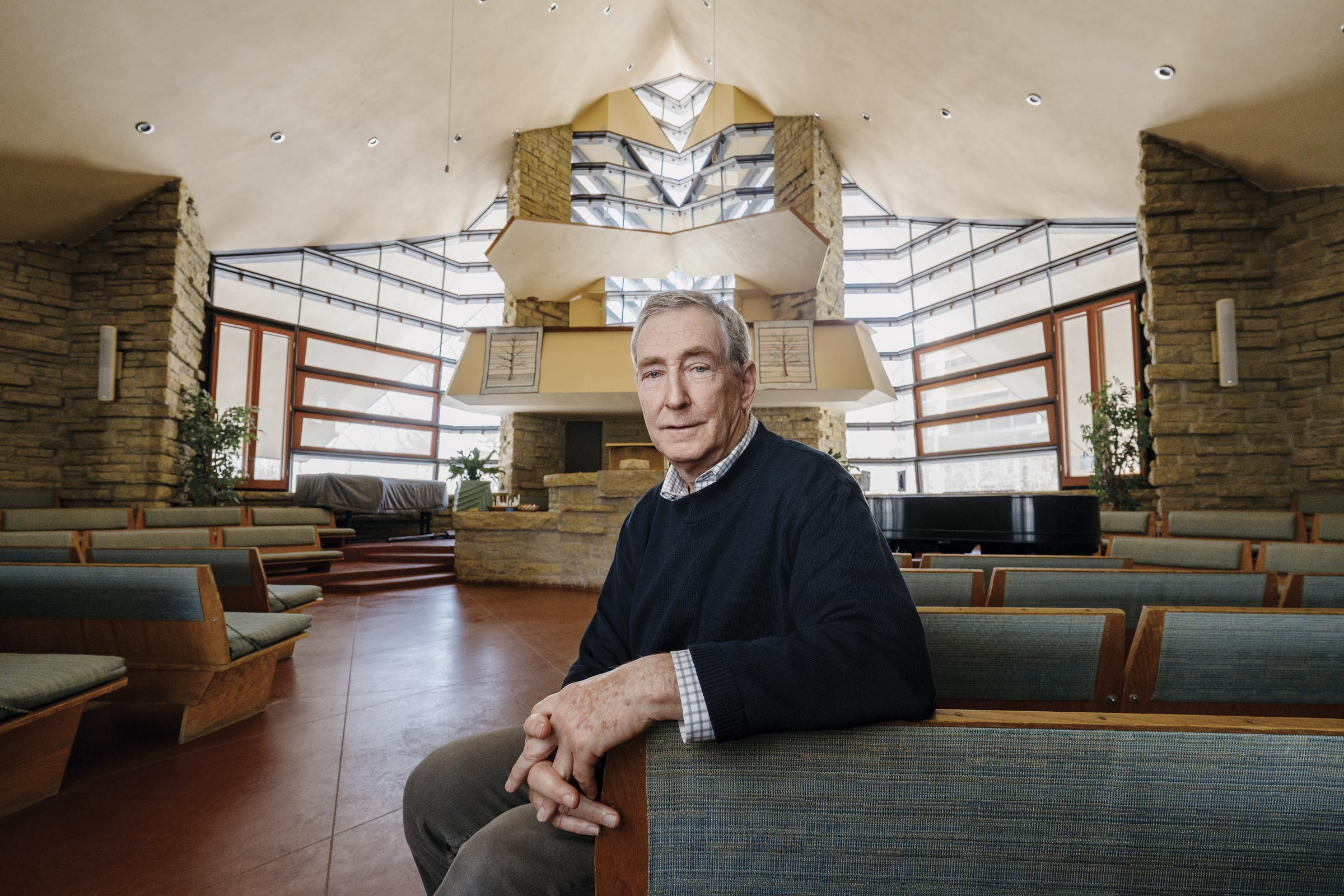
The interest in architecture should come as no surprise, because Dan spent his upbringing surrounded by beautiful buildings. As a child, his family attended Saturday night soirées at Taliesin, home for 50 years to Wisconsin’s most famous architect, Frank Lloyd Wright (x1890). The home Dan grew up in was also designed by a Frank Lloyd Wright protégé, Madison architect William Kaeser, and built by Dan’s father Marshall Erdman (’48). Together Wright and Marshall were behind the design and construction, respectively, of the Unitarian Meeting House in Shorewood Hills, a sun-soaked church that Dan still visits regularly to this day.
The Erdman family connection with Wright started with a problem. Wright had designed a beautiful building for his home church with panoramic windows, beamed ceilings and stone finishes. But the church couldn’t afford to build it. Not willing to give up his vision, Wright connected with a professor of labor economics at his almost-alma mater, the University of Wisconsin. (Wright never did quite finish his degree.) The professor happened to have had Dan’s mother Joyce Erdman (’46, MA’47) in his class and drew the connection to Marshall. At the time, Marshall was early in his career as a builder. But then Wright came knocking on his door with a question: “Baby, do you want to become famous?”
And the rest is history. Marshall built the church within the budget, and the Unitarian Meeting House has become a historic landmark honoring Wright’s legacy. And as promised, that job launched Marshall’s career to new levels and grew the reputation of his construction company. Today, Dan is honoring Wright’s impact on his family’s history by funding the Frank Lloyd Wright Professorship in Modern American Architecture within the Department of Art History to create new resources for learning and research.
My father always said that everything he had ever earned, he owed to Frank Lloyd Wright. It felt fitting that I could close the circle and give back to Wright in a sense, by putting his name on this professorship.
“My father always said that everything he had ever earned, he owed to Frank Lloyd Wright,” Dan says. “It felt fitting that I could close the circle and give back to Wright in a sense, by putting his name on this professorship.”
The combination of Marshall’s passion, Wright’s influence and an art history education has proven to be a power-packed toolbelt for Dan to draw from in his own career, and he’s had success as a real estate developer. Perhaps the project he’s most proud of is one that his father left unfinished when he passed in 1995. Marshall had a new urbanism dream for his Middleton Hills development to become a walkable neighborhood with a commercial area that fit everyone’s needs with access to stores, cafes and restaurants. Dan ushered the project to the finish line after his father’s passing, and it has become a beloved home to people who value the village design and one of the great modern examples of new urbanism.
“My father wanted to do something good for this community, and I wanted to do right by my father,” Dan says. The project was a success, even catching the attention of UW–Madison’s inaugural Frank Lloyd Wright Professor of Modern Architecture, Anna Andrzejewski. “It was really visionary. Marshall’s idea and Dan’s involvement in developing the commercial district have led to a thriving area today.”
On Site
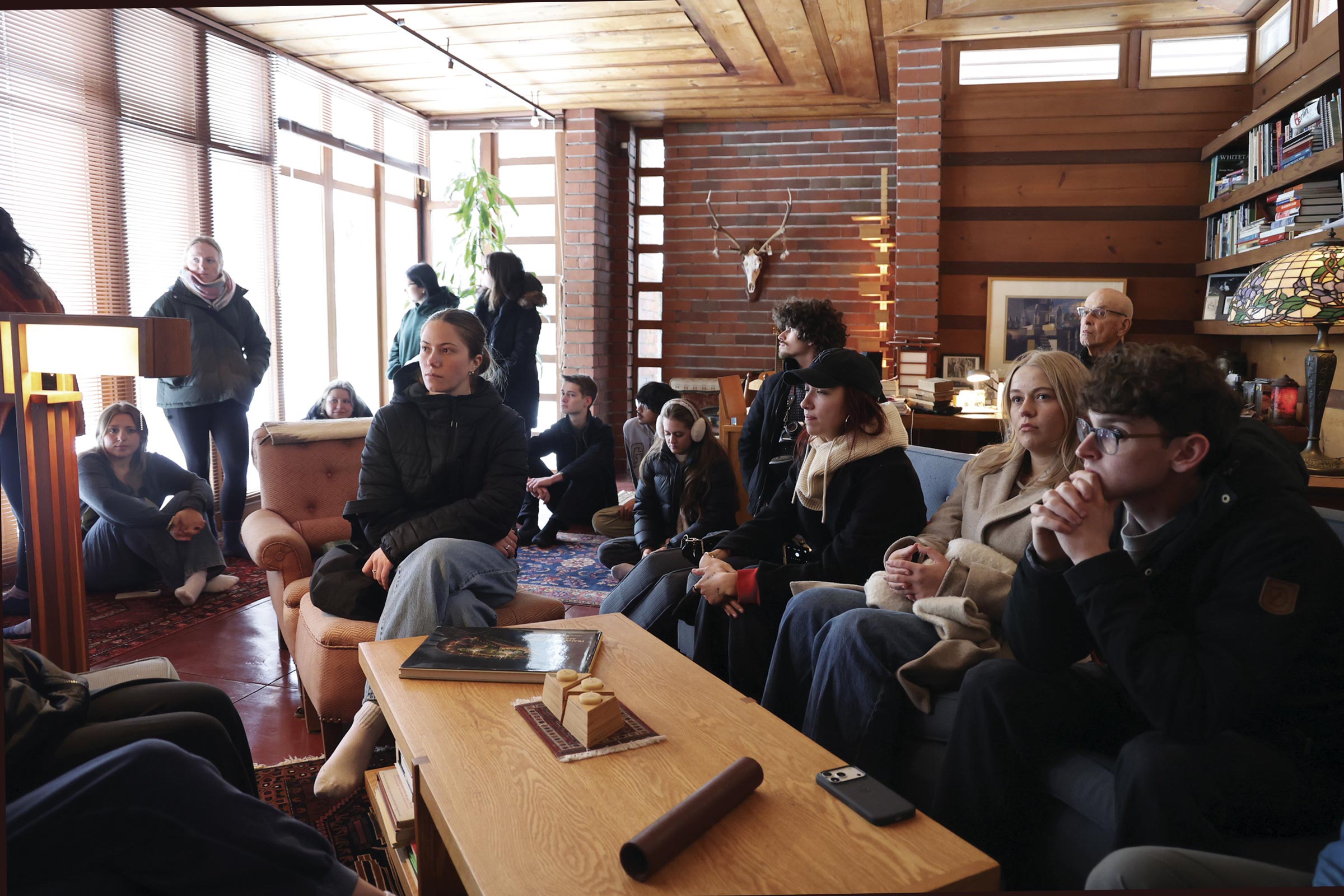
Often there are as many students on the waitlist as there are on the roster for Anna Andrzejewski’s Frank Lloyd Wright course. The course was always transformative, but new resources provided by Andrzejewski’s Frank Lloyd Wright endowed professorship have made it a once-in-a-lifetime opportunity.
“This gift allows us to go see buildings and experience them,” Andrzejewski says. “Watching these students’ eyes as they move through a Frank Lloyd Wright space, you can see them understand his work in a new way.”
Andrzejewski reminds her students that Wright’s designs were a direct response to his fascination with modern events, and it’s part of what has made his work so timeless. He lived during a time of suburbanization and mass production, and his custom builds pushed against this by drawing in each property’s surroundings.
“In an age where we’re on our phones all the time, it’s these in-person experiences that help us understand things on a deeper level,” Andrzejewski says. “Students tell me all the time that they not only look at Frank Lloyd Wright buildings differently, but all buildings differently.”