Planting Seeds: The Restoration Ecologist
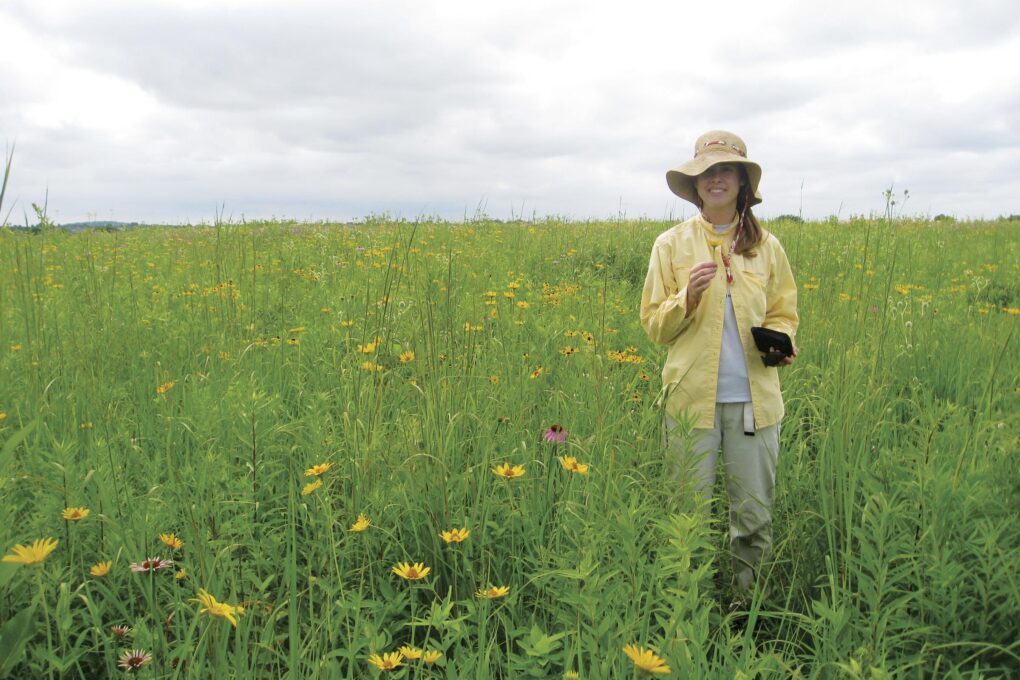
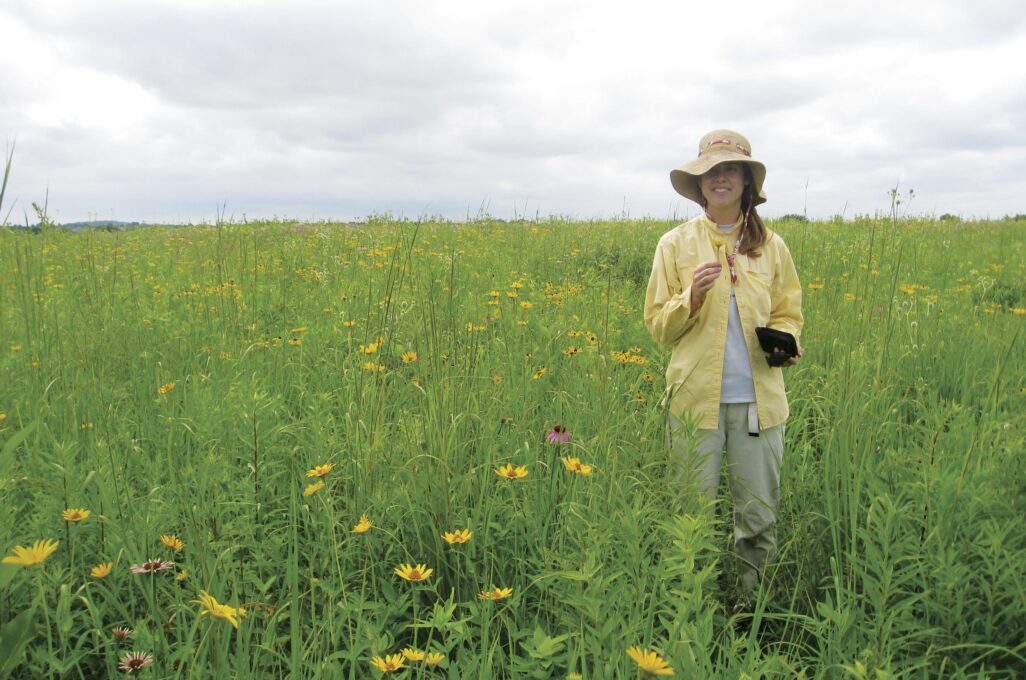
Have you heard of Silphium laciniatum? It’s more commonly called a compass plant, and when Evelyn Williams (PhD’12) talks about it, she lights up. She speaks with both the assuredness of an expert and the enthusiasm of a newbie who just discovered something incredibly cool.
Williams is a restoration ecologist with Adaptive Restoration LLC, a job that has her traveling across Wisconsin restoring prairies and other lands that have been altered by human intervention. It’s intense work that operates on a timetable of decades. After years of human intervention — industry, agriculture, the introduction of invasive species — the land requires serious science, serious effort and serious time to return to what it once was. She’s burning overgrown prairies, carefully applying herbicide to remove invasive species, planting native species, and sometimes simply putting on gloves and weeding.
That brings us back to the compass plant, Silphium laciniatum, a native species in the central and eastern U.S. whose bright yellow flowers you’ll see in prairies that haven’t been altered or harmed by invasive plants. When Williams was an undergrad studying biology at Minnesota’s Carleton College, she learned about the plant in-depth: its drought-resistant 15-foot roots, the way its leaves point north and south to avoid the noonday sun.
When she graduated, she didn’t know exactly what she wanted to do for a career, but she did know one thing: “I wanted to get to know a plant as well as I had gotten to know the compass plant.”
Restoration is a hopeful science … It’s a long-term process, and it drives home the importance of conserving the precious natural places we already have.
That brought her to UW–Madison’s College of Letters & Science, where she earned a PhD in botany and plant biology. Her first week of class, she went out in the field with another student, Mike Healy (MS’09), to do a vegetation survey, not realizing that the chance meeting would change the course of her career.
After graduation, Williams worked at the Chicago Botanic Garden for nine years as a conservation scientist and researcher, studying species of conservation concern. It was intellectually stimulating, but she missed the more visceral engagement she had at Carleton — working with chainsaws, smelling a prairie burn on open air, pulling and planting.
“I really wanted to be back in the field,” she remembers. “Then a friend of mine said, ‘Hey, you remember Mike?’”
Healy had started Adaptive Restoration based in Mount Horeb, Wisconsin, and was looking for a restoration ecologist. Williams reached out, and the fellow Badger hired her.
For the past five years, she’s worked with private landowners, nonprofits and other organizations to restore land, planning and developing strategies to bring these places closer to what they were centuries ago.
“Restoration is a hopeful science,” Williams says. “You know you’re not going to see the results until 20, 30, even 50 years later, and restored sites still aren’t exactly the same as a site that was never disturbed. It’s a long-term process, and it drives home the importance of conserving the precious natural places we already have.”
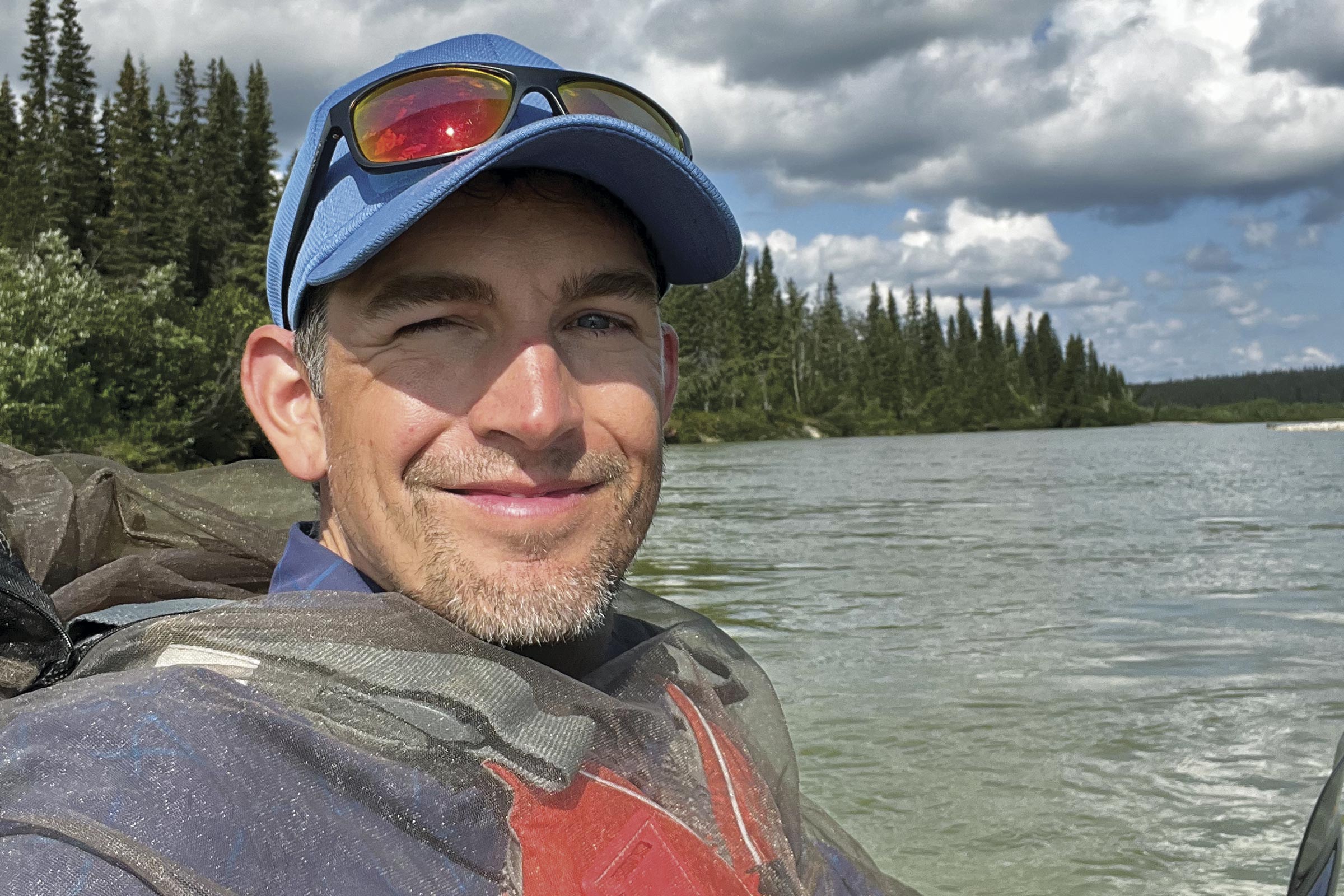
Taking Root: The Environmental Journalist
When a piece of plaster fell from the ceiling of the Memorial Union, it changed the course of Alec Luhn’s career. The freshman undergrad with an undeclared major was wandering through a course fair, when the taped-off plaster on the carpet blocked his path. He wound his way around it and then found himself in front of he Russian program’s booth. The folks behind it soon convinced him to join their First-Year Interest Group (FIG).
Twenty years later, Luhn (’10) spent more than a decade in Russia as a journalist, reporting extensively on climate change and its effects in the arctic and across the globe. He fled the country with his wife, BBC journalist Veronika Silchenko, after the invasion of Ukraine in 2022, and today he is an environmental reporter for the New Scientist and a freelance reporter covering climate change and the environment.
His globe-trotting career started at The Norse Star, the student newspaper of Wisconsin’s Stoughton High School. At UW–Madison, he completed journalism, history and a Russian language major sparked by that career fair.
How do we do something about climate change in a world that continues to pump more and more carbon into the atmosphere?
He wrote one of his earliest stories on the environment for The Badger Herald, when he investigated the Charter Street Heating Plant near campus. At the time, the plant burned coal, and the Sierra Club was advocating to have it shut down.
What happened after his graduation was almost as fortuitous as that broken piece of plaster — Luhn found a job listing at The Moscow Times for a business reporter. When he landed the gig at the English-language independent newspaper and flew to Moscow, his Russian degree came in handy.
Over the next decade, he covered Russia for multiple outlets, including The Nation, CBS News, The Guardian and Vice News. During the 2014 Russo-Ukrainian War, he was on the front lines, driving out to report on the conflict as shells went off around him. Most of his work covered geopolitics, such as two interviews with Russian resistance leader Alexei Navalny, but he increasingly saw a bigger, global story in climate change.
In 2016, he went to the Arctic to cover a story about a shaman who was fighting Russian oil drillers encroaching on Indigenous lands. He later returned to the Arctic to cover the thawing of the permafrost due to warming — more than 100 buildings had collapsed or been demolished because the permafrost beneath them was giving way.
“Back in 2016, climate change was already having these effects — seeing it firsthand really opened my eyes,” he says.
In 2022, Luhn and his wife moved to Istanbul and then London, where he now writes for the New Scientist and Scientific American and has launched his own Substack, Ice Mushroom.
When rivers in Alaska began to turn orange due to permafrost thaw releasing metal and acid from the soil, he traveled there with a group of scientists to report on the alarming degradation and its effects on the Indigenous population. More recently, he has covered efforts to solve climate change through carbon removal technology, as well as attempts to re-freeze sea ice in the Arctic and cool the planet.
“How do we do something about climate change in a world that continues to pump more and more carbon into the atmosphere?” Luhn asks. “There’s more attention toward radical solutions and controversial approaches. This is the biggest story that humanity is dealing with.”
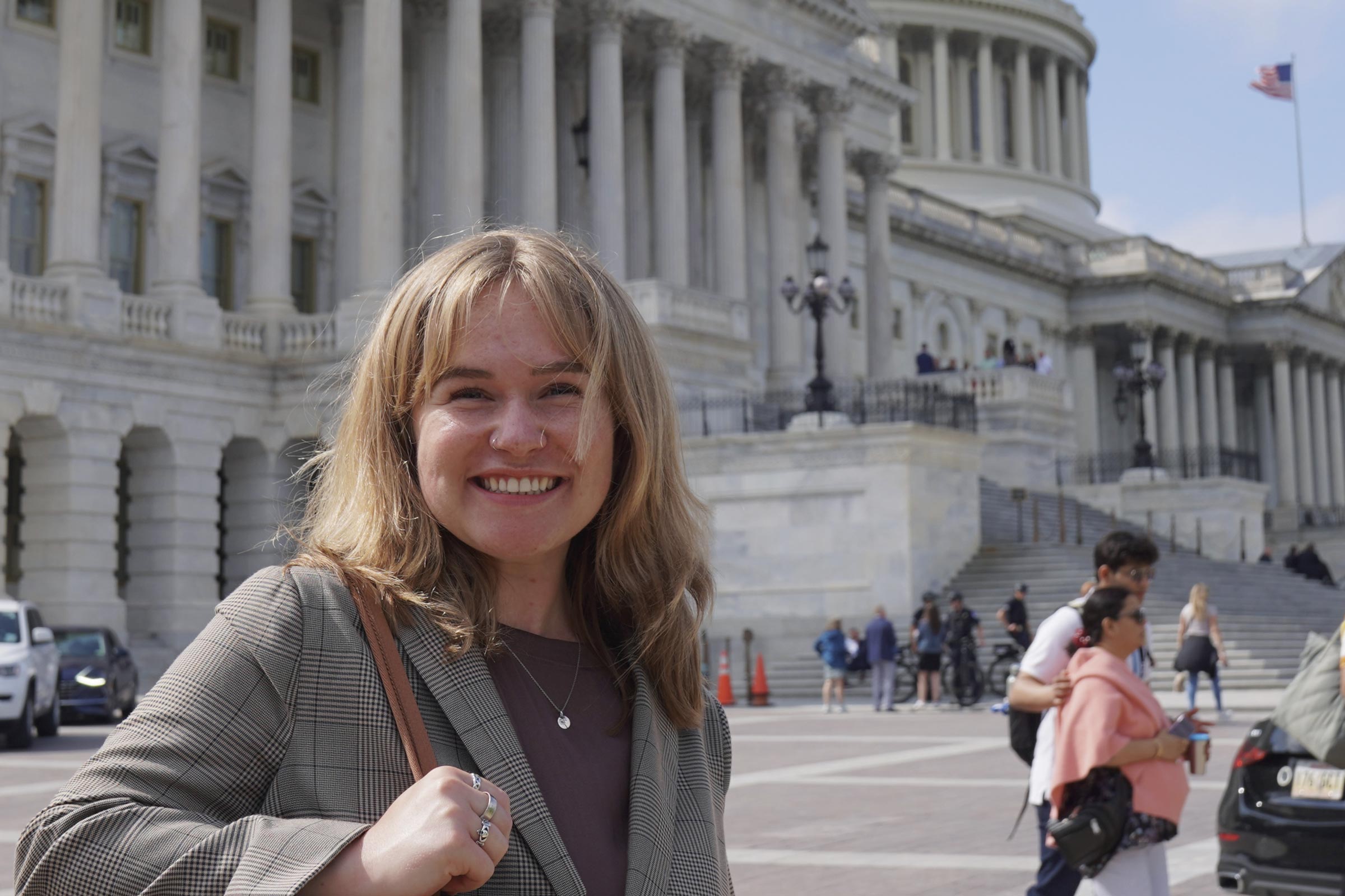
New Growth: The Advocate
Growing up in St. Paul, Minnesota, Leah Terry (’23) treasures memories of the Boundary Waters: canoeing vast lakes, hiking forested trails, watching the starry night sky from a secluded campsite. The pristine nature she unthinkingly loved as a child, she later realized was there because people protected it and made it available for her. Those memories are now the fuel for a career that sees Terry protecting lands just like those as the government relations coordinator for Defenders of Wildlife, a nonprofit conservation organization in Washington, D.C.
When Terry arrived at UW–Madison, the world of lobbyists and policy reform was far from her mind — she initially applied with a major in theater. Not quite sure what she wanted to do, she switched to political science and interned with a state representative, eventually adding a communication arts major.
An internship the summer before her senior year brought her to D.C., where she was a domestic policy intern with the Alliance to End Hunger. She wrote a white paper filled with policy suggestions to expand Supplemental Nutrition Assistance Program (SNAP) benefits. Watching the team of professionals use those suggestions in their work, she saw for the first time how she could make change.
I want to fight for other people to have access to nature and wildlife like I’ve had.
“That was my first time seeing how advocacy works on the federal level,” Terry says. “It was this spark that told me, ‘You should follow this.’”
After graduation, Terry moved to D.C., where she worked for a nonprofit, Network for Public Health Law, for a little more than a year. Her work gave her the chance to research climate adaptation strategies and access to green space, and she realized that her interest in public policy and her early love of nature might have a perfect intersection.
“I realized that I wanted to focus on environmental work, specifically conservation,” she says. “I want to fight for other people to have access to nature and wildlife like I’ve had.”
That brought her to Defenders of Wildlife in 2024. The nonpartisan group advocates for the protection of wildlife and the conservation of natural lands. As the government relations coordinator, Terry supports a team of lobbyists and other policy pros working to conserve nature, preserve habitats and protect endangered species and other wildlife. The organization grades members of Congress on their conservation records and logs legislative attacks on bills such as the Endangered Species Act.
Terry also helps organize an annual fly-in, during which about 20 activists — from the organization’s more than 2 million members — come to D.C. to meet with representatives and senators and advocate for wildlife protection. “It’s incredibly inspiring to hear these people’s stories and learn why they come from all over the country for this,” Terry says.
“Everyone I work with has a similar story to me about why they care about wildlife,” she says. “They had the chance to experience it growing up, and that love was instilled as a core value in them. Expanding access to wildlife is the root of how we expand the conservation movement. If you’re making sure young people in future generations can access these same things, that’s how we get people to care long-term.”