
Gloria Marí-Beffa knew it was a missed opportunity. The year was 2022, and the College of Letters & Science associate dean for research had just received a call for grant proposals from the National Science Foundation (NSF) offering the chance to apply for more than $160 million in funding to leverage research that could create engines of economic development. Instead of celebrating, she winced. The College lacked almost all the necessary partnerships, point people and connective infrastructure to meet the program requirements and qualify for consideration.
“We didn’t have partners that we could reach out to,” recalls Marí-Beffa, who is also a professor of mathematics. “And that’s when I started thinking, we need infrastructure to help with this. We had always left it up to the professors, and there’s no way professors can take on these big, large projects.”
We didn’t have partners that we could reach out to. And that’s when I started thinking, we need infrastructure to help with this.
Fast forward four years, and the picture has shifted dramatically. Marí-Beffa took the miss seriously, using it as a spark to build the Collective for Research Impact and Social Partnerships (CRISP), a growing team aimed at building bridges between campus researchers, industry partners, community organizations and governmental entities that could result in crucial funding opportunities.
The timing was critical or, as Marí-Beffa puts it, “lucky.” The CRISP team began laying its groundwork and building partnerships a year before federal research grants from bedrock agencies like the NSF and the National Institutes of Health (NIH) began getting slashed or canceled entirely. Suddenly, universities across the country needed to find private funding to support public research.
“Everybody was pivoting to foundations and other types of private funding,” says Marí-Beffa. “We were ahead of the game, because we had just put together this group of people to do exactly that.”
Teaming Up
CRISP launched with the hiring of Dave Schroeder, a military intelligence officer in the Wisconsin Army National Guard. Schroeder hit the ground running, using his government know-how to connect computer science researchers with national cybersecurity efforts.
His work resulted in UW–Madison hosting the first-ever academic talk held by the U.S. Department of Defense Cyber Command on a college campus and multiple partnership opportunities for researchers in L&S. Schroeder’s efforts were so successful, he was recently named UW–Madison’s Director of National Security Initiatives.
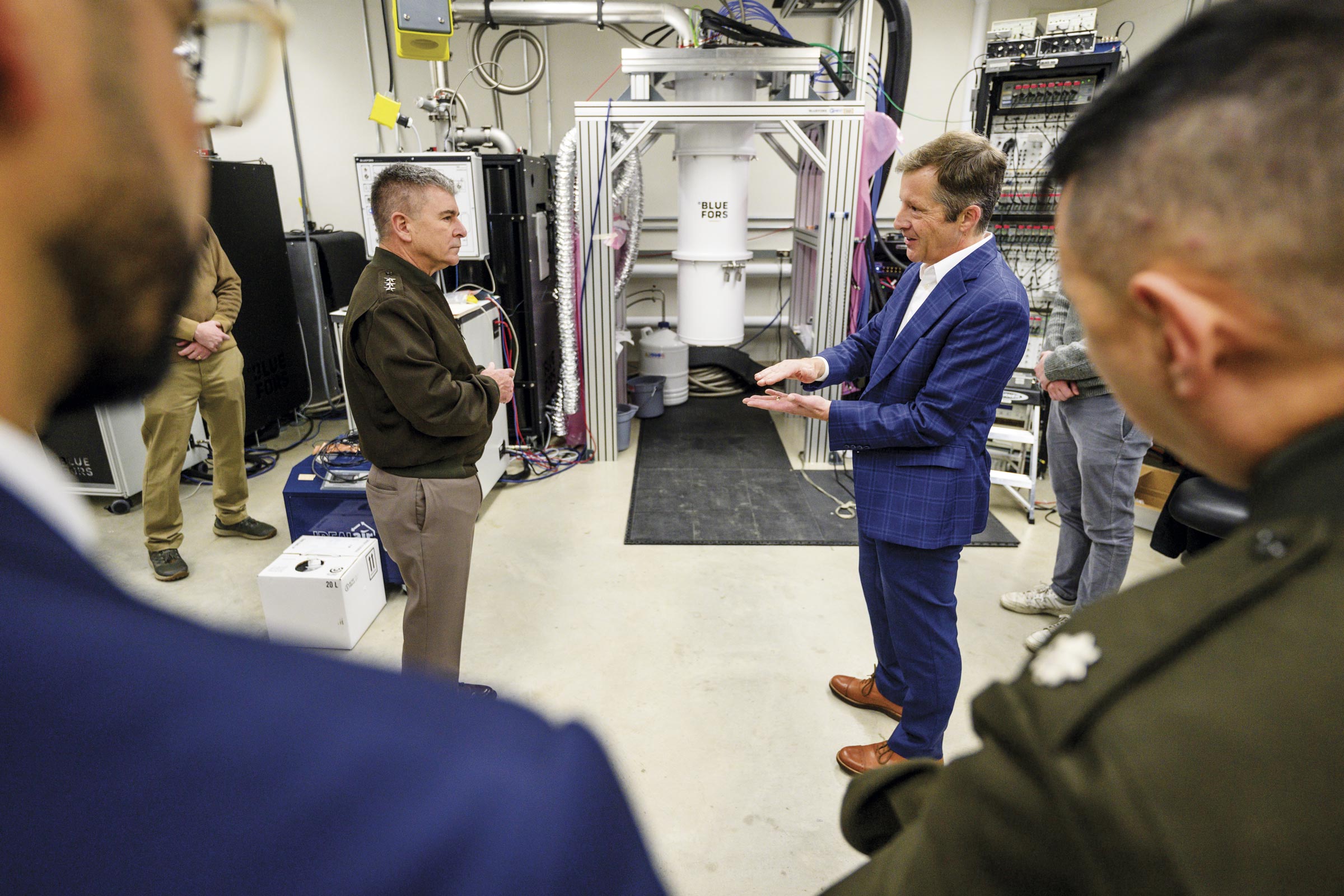
Kyle Joseph, CRISP’s associate director for business engagement, was the next puzzle piece. Immediately, he saw a massive opportunity in the fast-moving world of quantum research. The speed and scope at which quantum computers and sensing devices can process algorithms is critical to everything from developing new drugs and creating stronger cryptography to improving mapping and medical diagnostics. Solutions in these arenas are not only good for the public, but also a significant business opportunity for those ready to invest. Plus, UW–Madison has the leading experts on the topic, including several in the Department of Physics. CRISP’s impact and influence was instrumental in the recent hiring of Ona Ambrozaite, the new executive director of the Wisconsin Quantum Institute, a centralized hub in the Department of Physics aimed at streamlining and supercharging quantum efforts on campus and beyond.
“We are leaders in this research, and there are funding opportunities that could support growing the research and the impact it could have,” says Joseph, who has a deep history with entrepreneurship and corporate innovation. “That’s at the core of what CRISP is trying to do: connect the researchers to those who will be using it once it’s fully developed.”
That’s at the core of what CRISP is trying to do: Connect the researchers to those who will be using it once it’s fully developed.
While the opportunities seem boundless, there are also significant challenges. Unlike our neighboring state Illinois, which for years has had an extensive quantum-focused infrastructure supported by both industry and state tax dollars, Wisconsin’s network is far more nascent. Joseph is busily building relationships with groups like the Wisconsin Technology Council to begin changing that equation.
“The Council’s new president, L&S political science alumna Maggie Brickerman (’08), is working closely with us to help drive the coordination of companies interested in advanced technology in Wisconsin,” says Joseph. “We are collaborating with multiple partners on opportunities to take a more strategic approach to driving industry engagement with next-generation technologies, securing more large-scale funding opportunities, and growing our regional ecosystem as a whole.”
Quantum isn’t Joseph’s only focus. He’s been looking for partnership opportunities across the College. This includes working with the new Public Tech Media Lab in the School of Journalism and Mass Communication, a new entity created by Professor Tomás Dodds to help newsrooms ethically deploy and use artificial intelligence and open-source tools. He’s also helping the Department of Communication Arts stand up the Creative Futures Lab, a consortium of media companies who may be interested in working with faculty and students.
Harnessing the Humanities
Many universities focus on science- and product-based research with the aim of bringing key scientific discoveries to market more efficiently. CRISP’s vision is broader, in that it also seeks to incorporate other parts of L&S, including the humanities and social sciences.
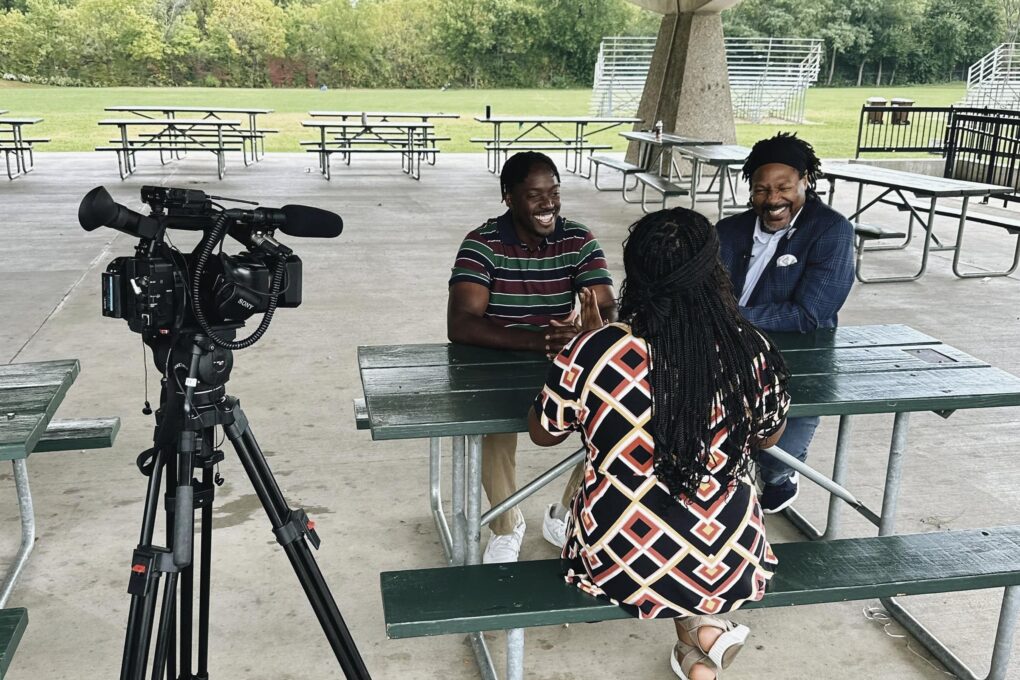
Faculty members have a long history of partnering with community organizations. For example, Madison’s Center for Black Excellence and Culture has worked with both the Center for Healthy Minds, a psychology research lab focused on well-being, and the newly established SoulFolk Collective, a research group with the mission of understanding and bettering the Black Madison experience.
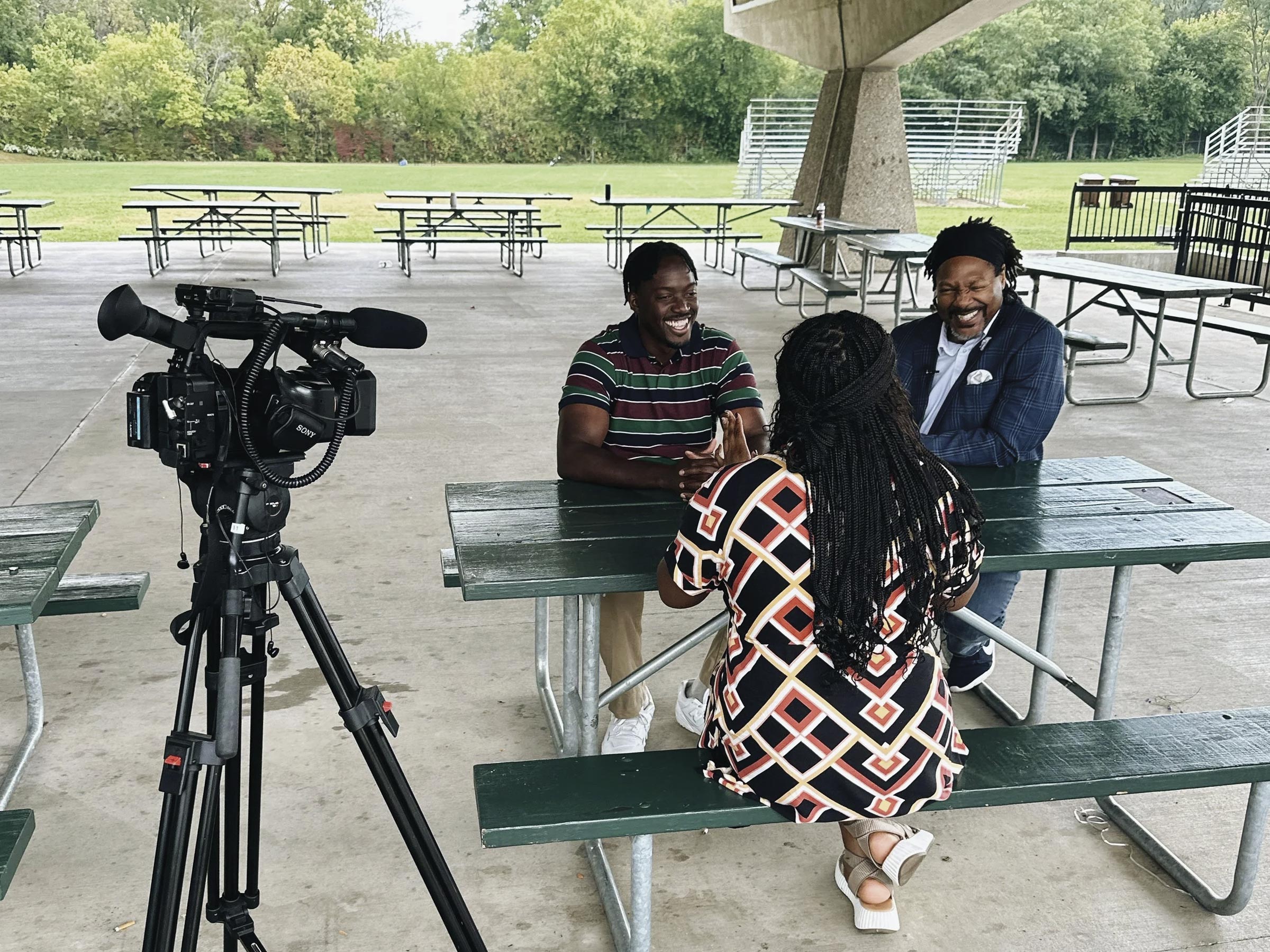
Other L&S researchers — including faculty members from the Center for the Study of Upper Midwestern Cultures and the Department of Communications Arts — also have long-standing partnerships with community organizations.
[We’re trying to] take the pieces and mesh them together so that not only is the science being done. But it’s done in partnership with local and state communities to really elevate their needs, desires and futures.
Honoring these community connections is where Erin Bailey (’09, MS’17, PhD’24), an alumna with a background in human ecology, comes in. As CRISP’s associate director for community-engaged research, her role is to bolster existing community relationships and create new pathways for collaboration. Her work is done first and foremost through a humanistic lens.
“We’re open for communities to say, ‘I have a question about my community, and I think there might be somebody there that could help,’” Bailey explains. “My job is to help them find that person. What we’re really trying to do is take the pieces and mesh them together so that not only is the science being done, but it’s done in partnership with local and state communities to really elevate their needs, desires and futures.”
The Next Chapter
Marí-Beffa retired from her associate dean for research role earlier this year. Michael Morgan, a professor of atmospheric and oceanic sciences with a strong history of federal experience, including time in a leadership position at the National Oceanic and Atmospheric Administration (NOAA), has stepped in to direct CRISP into its next phase of development.
Through these collaborations, CRISP embodies the Wisconsin Idea.
Morgan sees CRISP as a key priority for L&S, and he wants to keep it front and center — not just because he wants the ability to capitalize on critical funding opportunities, but because of the opportunites that come with developing solutions in collaboration with communities, government programs and industry partners.
“I recognize in the landscape that we’re working in now, where federal funding is potentially contracting, that there’s always uncertainty,” Morgan says. “We need to make sure that CRISP is connecting L&S researchers with federal agencies, industry, philanthropy and community leaders to address society’s most urgent challenges. Through these collaborations, CRISP embodies the Wisconsin Idea.”