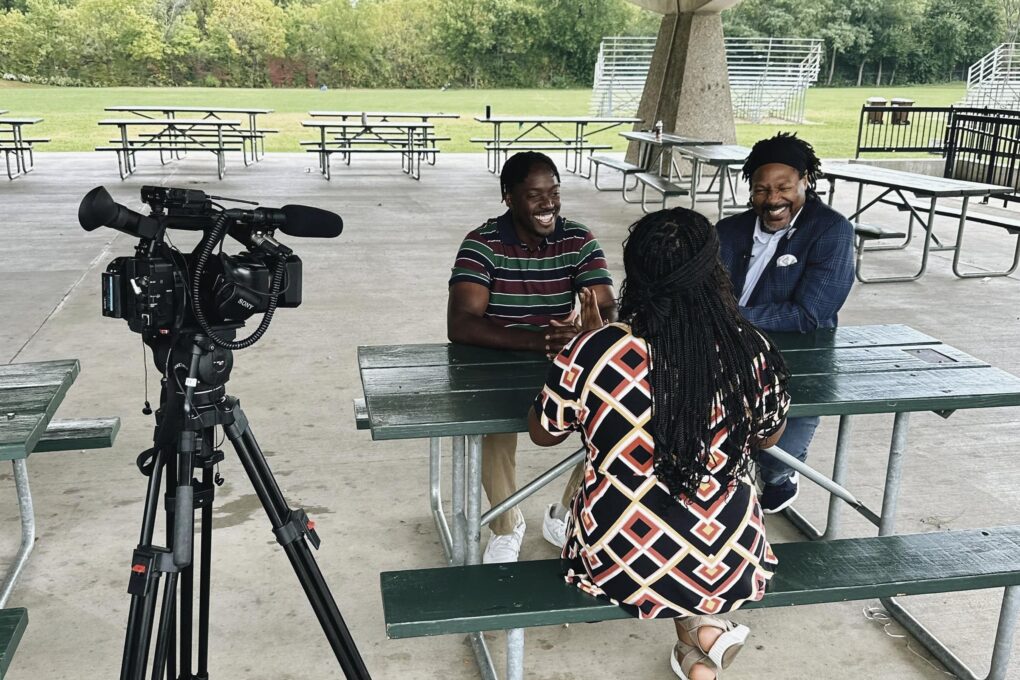
What were some of the most popular science stories of 2025? My colleague Mayra I. Oyola, the Ned P. Smith Distinguished Chair of Meteorology, and I discussed some of them during our radio show at Madison’s Community radio station, WORT. Uranus’s new moon, the impact of vaccines on Alzheimer’s onset, 3D images of an embryo, among many others. All these stories have a wow factor that makes you feel like we are turning on the lights in a dark room, only to realize the room we are in is much bigger than we imagined.
I’ve always thought of my research in tropical weather and climate as novel and thought-provoking, but too esoteric to be of interest to the public. And then the MacArthur Foundation called. In the span of a few weeks, I talked to radio shows, podcasts and news reporters. They all wanted to know one thing: What was it about the tropics that drew the attention of the MacArthur Foundation?
I was met with amazement, as I described how different the processes that drive tropical phenomena are compared to the weather that Madisonians typically experience in the midlatitudes. Temperatures don’t fluctuate as much, so cold fronts don’t form in the tropics. Instead, you get big blobs of moist air that are often accompanied by heavy rain. These big blobs can be the size of continents, like the Madden-Julian Oscillation, or the size of states, like easterly waves. All of this happens in the same latitude band that also hosts hurricanes, El Niño and monsoons. Unlike the sunny paradise that many imagine, the tropics are an area where rich and diverse weather and climate phenomena take place. But there’s still so much more to learn. If our knowledge of midlatitude weather and climate were described as an encyclopedia that gets revised regularly, then our knowledge of the tropics would be a book draft — we’re still figuring it all out.
But why are we? Some say that tropical meteorology is inherently more complicated, and there is truth to this. But arguing that the complexity is the only reason our knowledge remains incomplete disregards an important historical context. Most tropical countries were subjected to colonization under the imperial rule and morality of those based in the midlatitudes. As a result, most tropical countries met the same fate: lands stripped of their resources and Native populations wiped out or enslaved. The outcome of colonial rule was poverty, instability and death. Its echoes are still felt today, long after the colonizers “left.”
In the aftermath of colonization, midlatitude meteorology was able to flourish while tropical countries lacked the resources to make their own advancements. That is, until War World II forced the Allies to engage in battle over the tropical Pacific. In desperate need of knowledge, the U.S. turned to Puerto Rico, where many breakthroughs in tropical meteorology paved the way to accelerated progress. Unsurprisingly, the U.S. reliance on Puerto Rico for tropical weather knowledge was not some sort of utopian partnership; it was deeply extractive. We — the people who were born in the tropics — were mostly left in the dark, barred from participation and assumed by some to be incapable of understanding the complexities of our Earth. It is no wonder that today, most progress in the field is instead attributed to scientists from the very countries that colonized us.
Most Puerto Ricans don’t know the importance of their island in the development of tropical meteorology. I studied atmospheric sciences in Puerto Rico and was never taught this! Yes, the knowledge eventually became public, but there was never any effort to engage with these communities, to share this knowledge. This history is also the story of tropical meteorology, and it tells us that our early quest to understand the tropics is inextricable from the staggering injustices it perpetrated. If this story seems familiar, it should. It is one that is ubiquitous across the sciences and easy enough to uncover, if you are willing to look. They all tell us an ugly truth about how science has — and continues — to be done: We liken new knowledge to a light that illuminates the darkness but refuse to look back at the abyss we have created on our way to that understanding. We do this to our own detriment.
After I received the MacArthur award, I’ve had a lot of time to reflect on my work and how to communicate it to the public, and that has made me open my eyes. I thought my work was not on the caliber to be newsworthy, but it always was. I question more how the history I just described shapes our perspective on what is considered a scientific breakthrough, and that has shaped the story I want to tell people about the tropics. I want a story that dares introspection, that makes you reflect on where we are today as a civilization and where we could go if we choose thoughtfully. That is what we need right now. And you know what? There are far more people than we imagine who are ready to listen.